
Central air-handling unit cleaning assessment
AHU and PAU Air-Handling Unit Cleaning
When filters, coils, drain pans, fans or accessible internal sections of an AHU or PAU need cleaning, Evolt Cool Engineering first reviews the unit arrangement, service access, shutdown and isolation needs. The quotation then identifies the included sections, items requiring separate assessment and handover records so facilities and property teams can compare the work before scheduling it.
- List the unit and included sections
- Confirm access, isolation and shutdown first
- Define reinstatement, records and follow-up
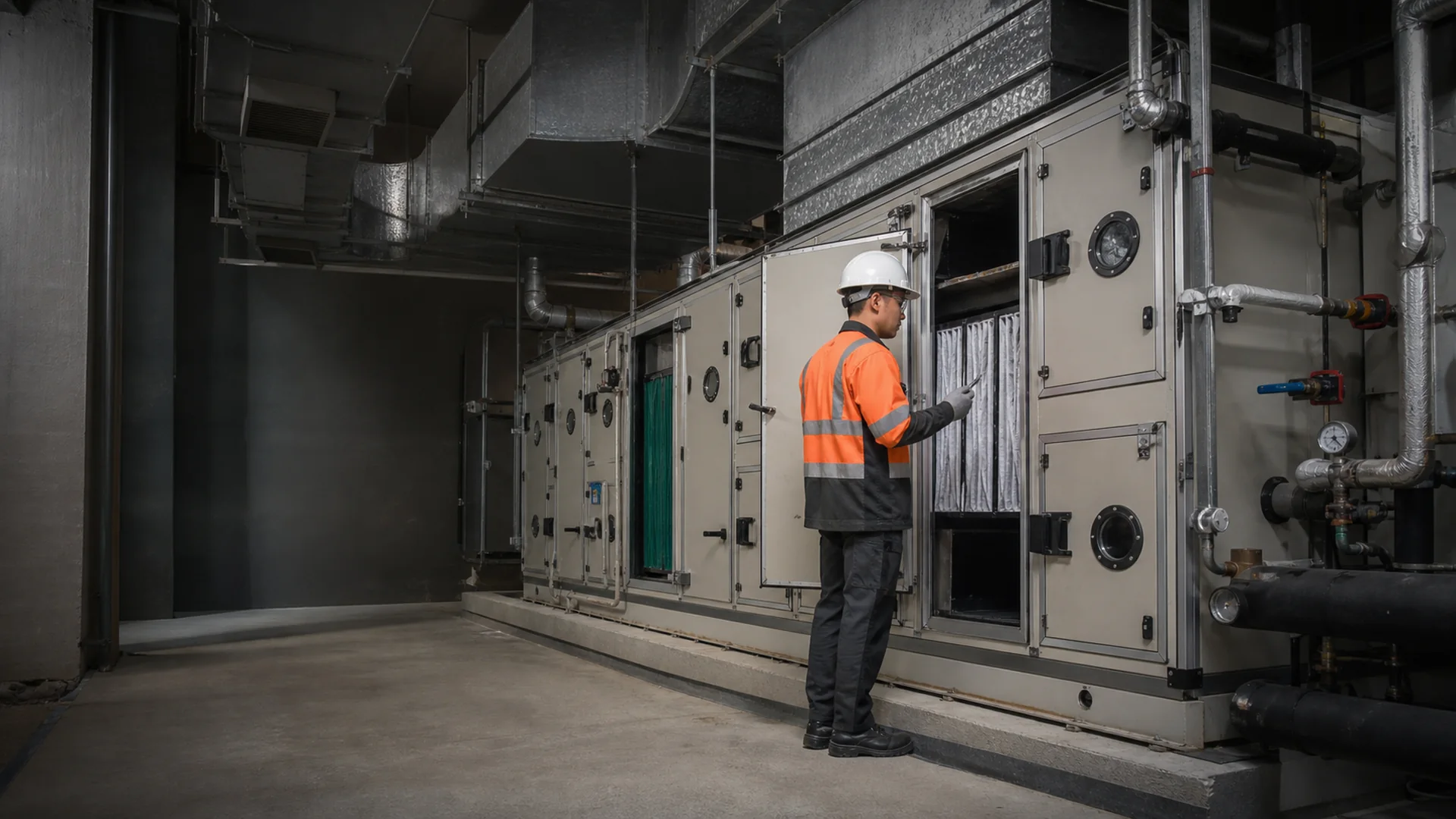
The background is a general AHU and PAU plant-room concept, not an Evolt Cool Engineering project record.
Start with the reason for the work
When does a cleaning assessment make sense?
The same equipment name can hide very different components, contaminants and access conditions. Describing the present situation helps establish whether cleaning is appropriate and whether repair, measurement or another specialist scope is also needed.
Inspection records show a build-up
Filters, coil surfaces, drain pans, fans or accessible internal sections show visible deposits that need a closer, section-specific review.
Drainage or internal conditions recur
There are signs of standing water, poor drainage or internal contamination, and the team needs to separate cleaning from blockage, damage or another fault.
A planned shutdown is approaching
A planned shutdown, annual works or a tenancy handover requires cleaning, repair and reinstatement responsibilities to be stated separately.
Quotation scope by unit section
A useful quotation lists equipment locations, unit sections, items requiring separate assessment, wash-water controls and handover requirements.

Turn one unit into checkable sections
State which section is covered and how far the work goes
AHUs and PAUs can both contain fans, coils, filters and condensate drainage, while their airflow role, component order and service access differ. The quotation should say whether each item is cleaned, removed, replaced or inspected only.
- Filter sectionIdentify the filter type, quantity, size and intended treatment. Washable media and replacement filters are listed as separate scope items.
- Coil and drainage sectionReview access to both coil faces, the drain pan and outlet, signs of standing water, and nearby electrical or control components.
- Fan, damper and accessible casingConfirm the fan or blower arrangement, guards, belt or motor location, dampers, internal surfaces and any removal boundary.
Resolve site conditions before shutdown
Cleaning starts with isolation and protection,
together with reinstatement planning
The available work period should cover more than the cleaning time. The areas served by the unit, control schedules, equipment interlocks and wash-water collection arrangement all affect the practical programme.
- 01
Unit and served areas
Match equipment location, plant-room locations and served zones so the correct unit is isolated and affected areas are understood.
- 02
Power, controls and interlocks
Confirm local isolation, control schedules, alarms, dampers and responsibility for stopping and restarting connected equipment.
- 03
Chemicals, protection and wash water
Review the product identity, current SDS, containment and collection plan for the actual method, keeping wash water away from unsuitable locations.
- 04
Drying, reinstatement and basic checks
Allow time for drying, reassembly, removal of isolation, control reinstatement and a basic operating check.

Prepare the cleaning quotation
Six inputs that help align the quotation with the equipment
- Site and equipment locationPremises, plant-room equipment location and AHU or PAU quantities
- Unit and service-door photosEquipment label, external views, service doors and safely accessible internal photographs
- Known unit sectionsFilter type, coil, drainage, fan and damper information
- Served areas and shutdownServed areas, operating hours, available work period and equipment interlocks
- Plant-room and isolationAccess, work permits, work-at-height, power and control-isolation requirements
- Records and handoverRecent maintenance, faults, leaks, cleaning records and required handover documents
From enquiry to handover
Five main steps for AHU and PAU cleaning
The method, materials and checks must suit the actual unit and premises. This sequence helps you track the decisions around the quotation; it does not prescribe one universal procedure.
- 01
Confirm the unit sections and work scope
Check the AHU or PAU arrangement, service sections, access positions, quoted components, operating constraints and available work period.
- 02
Plan shutdown, isolation and the work area
Confirm shutdown approval, electrical and controls isolation, plant-room access, work-zone separation, protection and wash-water handling.
- 03
Clean the stated sections to the approved method
Treat the filters, safely accessible coils, fan sections, drain pans, internal surfaces or other components listed in the quotation and method statement.
- 04
Refit and check each section
After drying, refit the components, remove isolation and restart as agreed, then check basic operation, control response and visible drainage.
- 05
Complete section-by-section acceptance
Check the completed scope, cleaned components, basic observations, inaccessible areas and repair or system items requiring follow-up.
Follow-up after cleaning can keep the scope clear
Other issues can be followed up together
Cleaning can reveal damage or operating problems, but it does not replace fault diagnosis, system measurements, control adjustments, electrical work or a formal IAQ assessment.
Airflow, temperature, drainage or wider operation is in question
Start with the AHU, PAU and FCU relationship, controls, water-side interfaces and available records.
Learn about AHU and FCU system support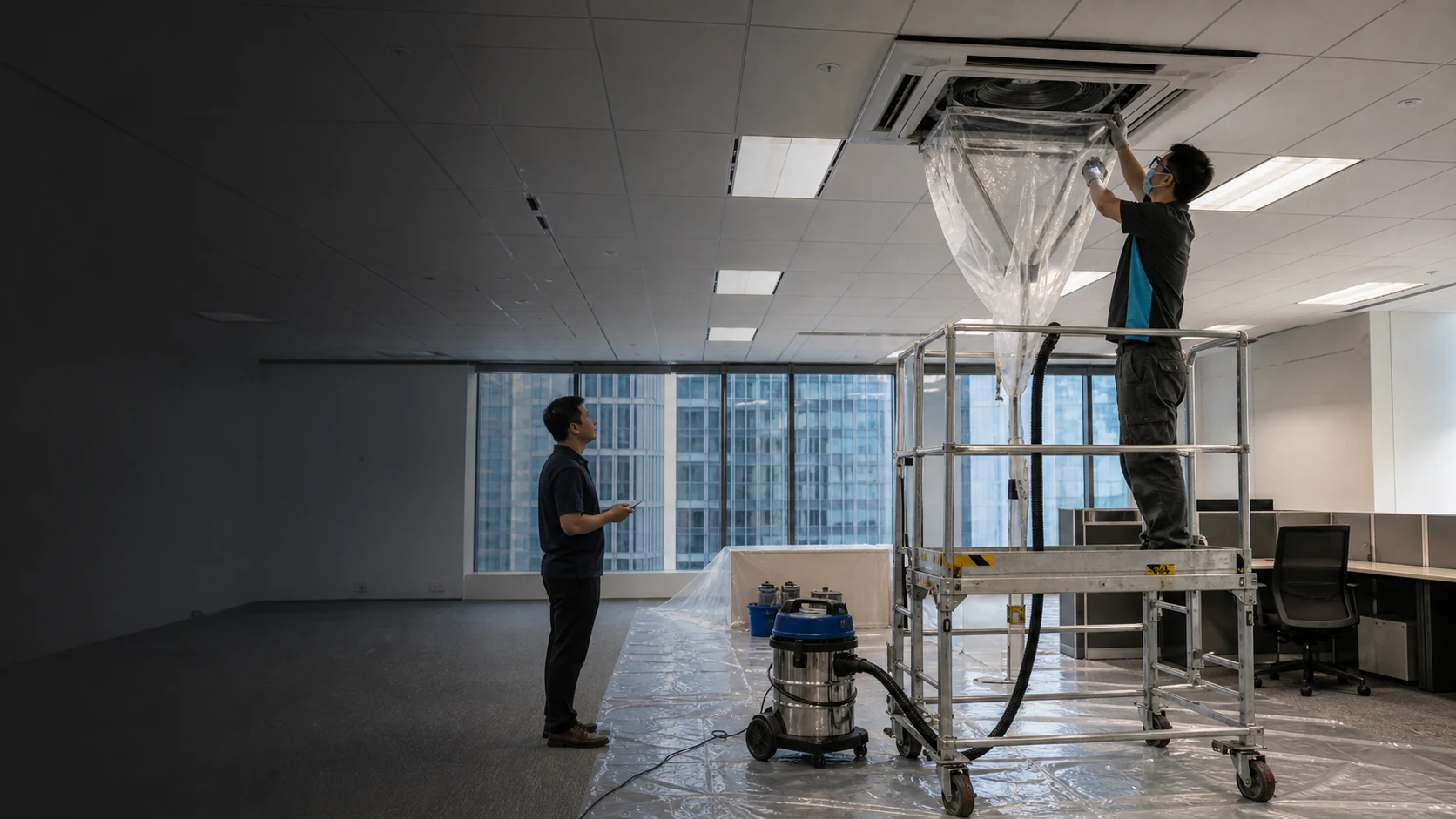
The unit is uncertain or several equipment types are involved
Use the commercial air-conditioning cleaning hub to identify equipment and the appropriate quotation process.
Learn about commercial AC cleaning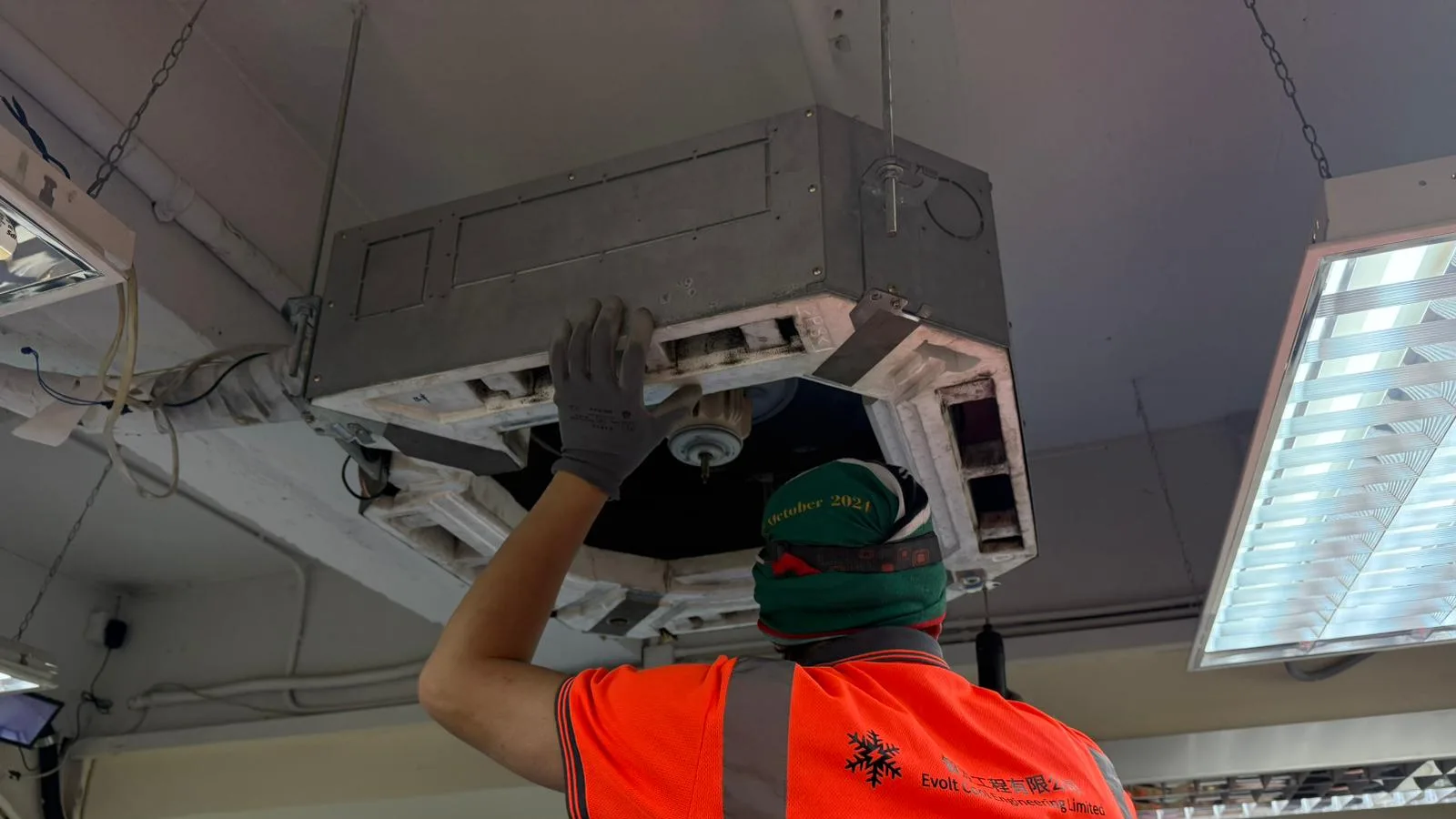
Regular visits, service allowances and follow-up are required
Review the units, quantities, operations and your requirements through an Evolt Care maintenance-plan enquiry.
Explore Evolt Care maintenance plans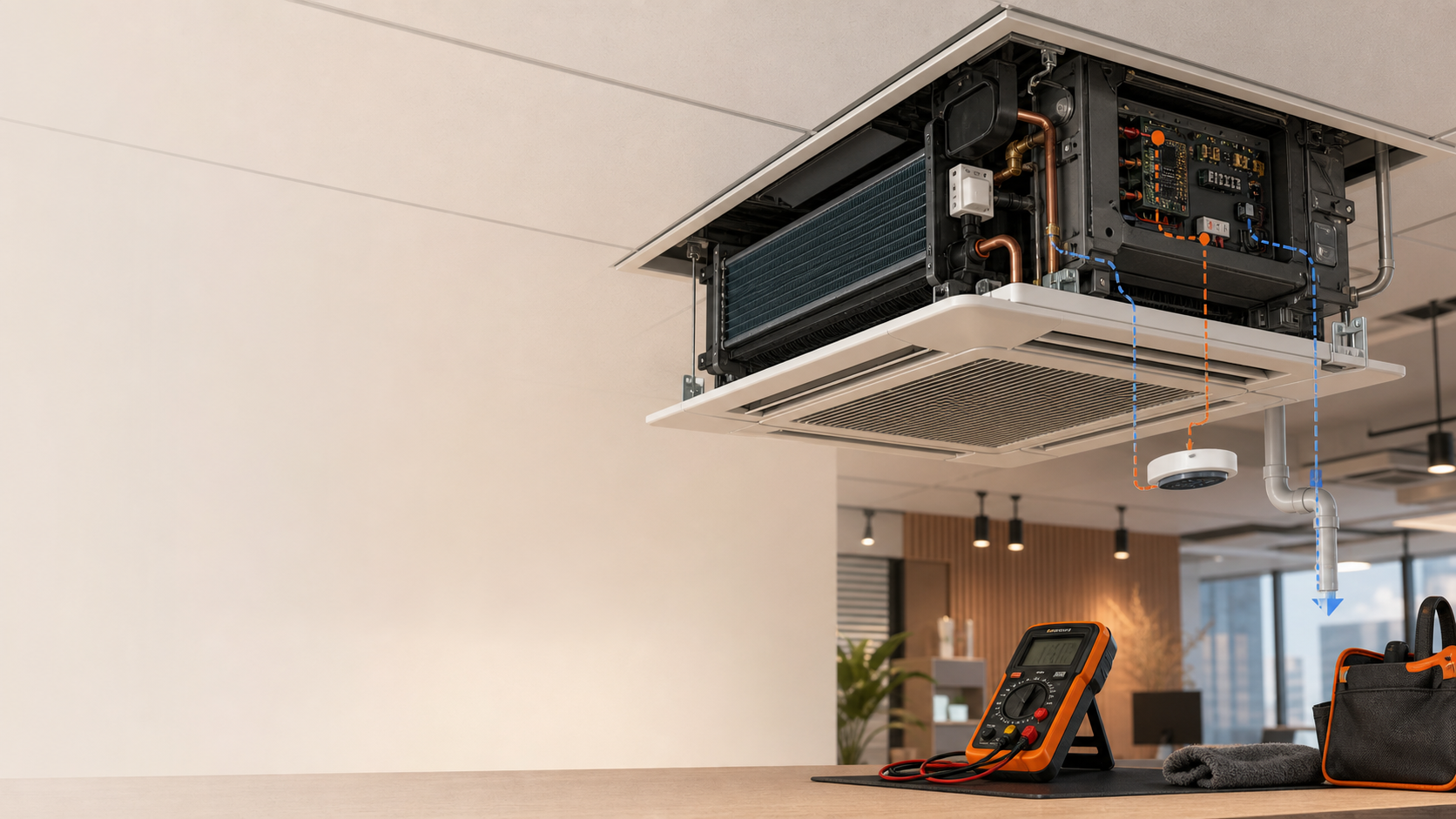
There is leakage, noise, an alarm, damage or a restart failure
Investigate the fault and safety implications instead of treating a repair issue as routine cleaning.
Learn about commercial AC repairWhat the handover should retain
More than “cleaned and switched on”
Handover records should match the approved work. Ordinary photographs and a basic restart check document the work and condition at that time; they do not prove design airflow, cooling capacity, IAQ or long-term performance.
- 01Unit and sections
List the equipment location, completed sections, inaccessible areas and items requiring separate assessment.
- 02Work record
Where allowed, retain matching-angle photographs and the filter, coil, drainage, fan or other items completed.
- 03Reinstatement
Record reassembly, removal of isolation, control reinstatement, drainage and the basic operating condition.
- 04Findings and next action
Separate damage, blockage, abnormalities, repair needs and work for another specialist.
Frequently asked questions
Five common questions before AHU and PAU cleaning
Why are AHUs and PAUs covered on the same page?
Both can include fans, coils, filters and condensate drainage, while their airflow role, component arrangement and controls vary by unit. They can share an enquiry framework, but the quotation still needs an individual scope for each unit.
How is duct work handled alongside AHU or PAU cleaning?
Duct inspection or cleaning is assessed separately against its condition, access plan, isolation, collection, reinstatement and specialist method, then listed in the quotation where applicable.
How is the cleaning interval set across the premises?
The timing reflects equipment use, operating hours, environment, filters, maintenance history, inspection findings and manufacturer requirements.
How can airflow or IAQ improvement be verified?
Airflow, capacity, ventilation balance, controls, equipment faults and IAQ require the corresponding measurements, diagnosis or accredited assessment. We can explain the appropriate assessment where verification is part of the requirement.
Can the work proceed within a shorter available work period?
Share the available work period and affected areas first. We will review the equipment relationship, isolation, drying, reinstatement and checking requirements, then confirm whether phased or out-of-hours work is practical.
Provide the equipment location, unit photographs
and available work period together
Start with the information you have. We can review the unit, access and site conditions before setting out a cleaning quotation for the premises. If another issue is found during cleaning, we will explain what can be followed up during the visit and what should be arranged separately for inspection or repair.