
Commercial AC fault enquiry | After-hours works
Emergency Repair and After-Hours Works
If an air-conditioning fault is disrupting commercial operations, or work must take place outside office hours, provide the site, affected equipment, safe observations, operational impact and available work period. Evolt Cool Engineering will review the information, risk, available resources and scope before confirming the next step; sending a message does not confirm attendance or repair completion.
The enquiry is first reviewed against site safety, operational impact, equipment details and access conditions. Any reply, attendance or repair arrangement is confirmed separately.
Immediate fault response and planned night work
require different arrangements
A fault enquiry starts with safety, operational impact and equipment condition. Planned work outside office hours needs access, shutdown, noise, protection, testing and handback to be settled in advance. In either case, the workable next step can only be confirmed after the relevant facts are reviewed.
An AC fault is affecting the premises
Examples include several areas shutting down, a water leak, unusual noise or smell, repeated tripping, or a controller alarm. Tell us about safety, the affected area and the operational impact first, so we can identify what else is needed.
- Protect people and the site first
- Note the equipment, alarm and time discovered
- Confirm a site contact and possible access
The work must take place outside office hours
This can suit premises where shutdown during trading hours is impractical, work must be phased, or access depends on building management and other contractors. The confirmed available work period, scope and permits should be stated in writing.
- Define the shutdown and restart window
- Confirm access, permits and noise restrictions
- Allow time for testing, clearance and handback
Six sets of details help us understand the site
- Site and locationAddress, floor, room, plant room or affected area.
- Equipment and quantityEquipment type, equipment location, approximate quantity and which units or zones are affected.
- What you can observeNo cooling, a leak, unusual noise or smell, tripping, alarm code and when it was first noticed.
- Safety conditionsAny smoke, fire, flooding, electric shock, damaged casing or other condition that needs immediate isolation.
- Operational impactPeople, rooms, equipment or services affected, and the available work period the site can accept.
- Access contactsSite representative, building management, security, loading, lift and permit arrangements.
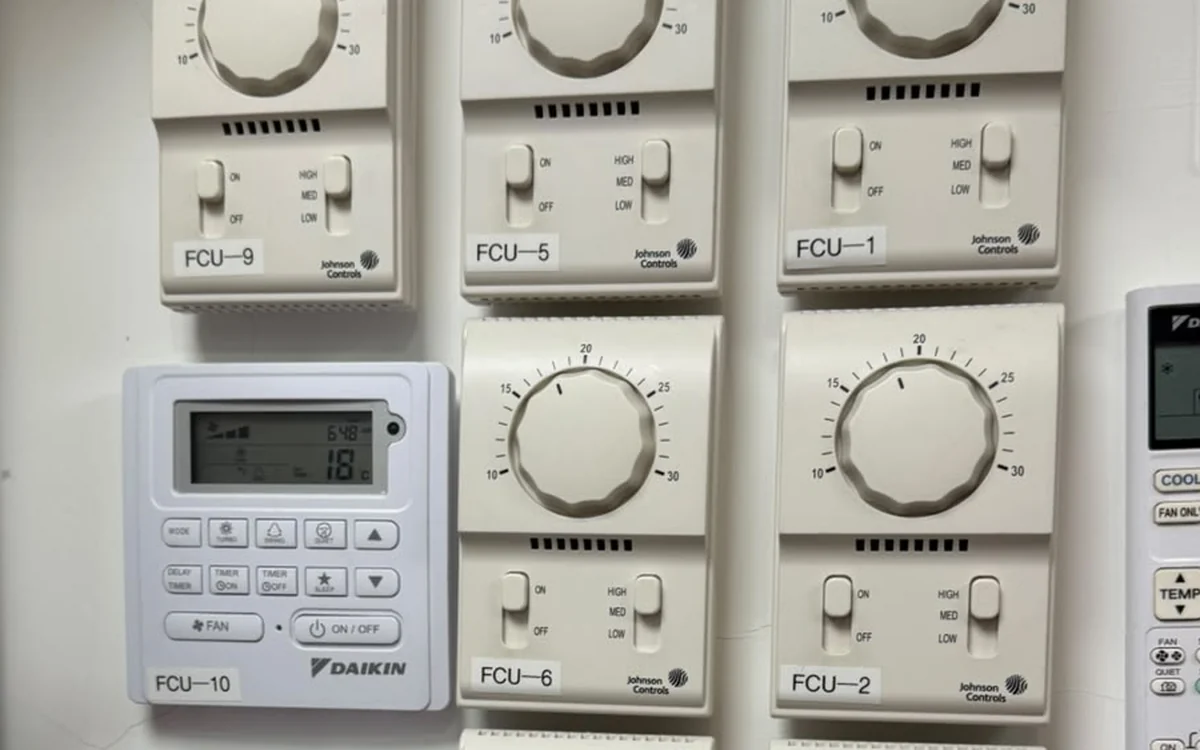
Photograph only what you can see from a safe position
From floor level or an existing safe access arrangement, a controller display, equipment location, leak location and nearby access conditions are enough. Leave concealed or high-level areas for the site inspection; do not open a casing, climb, remove a guard or approach water near electrical equipment.
Enquiry handling, site attendance and repair completion
are separate stages
Some faults can be assessed on a first visit. Others depend on parts, another trade, shutdown approval or further testing. Each stage should have a clear status instead of being grouped under a vague update.
- 01
Enquiry received
Confirms that the information has arrived; it does not mean a technician has been dispatched or an attendance time promised.
- 02
Situation reviewed
Safety, operational impact, equipment, site contacts and access conditions are checked.
- 03
Workable arrangement confirmed
Availability, technical scope and site conditions determine whether and how attendance can be arranged.
- 04
Inspection and temporary make-safe work
Inspection, temporary risk control, diagnosis and restoration are treated as distinct outcomes.
- 05
Quotation and approval
Parts, additional labour, other trades or a return visit are scoped and priced before approval.
- 06
Repair, testing and handback
The work done, test results, restart status, limitations and outstanding items are recorded.

Site attendance begins with fault inspection
and confirmation of the repair scope
The result depends on equipment condition, parts availability, access, electrical or controls interfaces, shutdown approval and the testing required. Even after temporary make-safe work, equipment need to remain off until the repair scope is approved.
Temporary make-safe work
Aims to reduce immediate risk or contain the impact. It does not mean the equipment is back to normal.
Fault diagnosis
Further measurement, strip-down, record review or input from the relevant trade is required.
Repair completion
Approved work is completed, followed by the applicable checks, tests and restart procedure before handback.
The available time is only the starting point;
access, shutdown and handback must also be confirmed
Night, weekend or public-holiday work is not automatically available. Building management, noise limits, work permits, lift access, security, other contractors and applicable statutory requirements can all affect the arrangement.
Access and responsible contacts
Confirm security registration, door access, loading, lifts, parking, the site contact and the person who can approve additional work.
Shutdown and isolation
State the equipment and areas affected, the available work period, isolation and restart responsibility, and how the site is left safe if work remains outstanding.
Noise and protection
Check building rules and applicable permits, then plan barriers, notices and protection for floors, ceilings, stock and common areas.
Testing and handback
Allow time for checks, testing, restart, clearance and joint handover, with any limitations, outstanding items and next step recorded.
Confirm inspection, repair, parts and work by other trades
as separate items
The written arrangement should state the service period, attendance or inspection scope, labour, parts, tools, access equipment, electrical or controls support, return visits, testing and handback requirements, so the price and work scope can be checked clearly.
- Attendance and inspectionPurpose, time, site, equipment and accessible areas.
- Repair labour and partsItems included, provisional, quoted separately or awaiting supply.
- Other specialist workFixed electrical, controls, refrigerant, work at height, access platforms or another named trade.
- Approval for additional workWho can approve it, any spending limit and when a separate quotation is required.
- Completion and outstanding itemsTemporary measures, repairs completed, test results, limitations and return arrangements.
Emergency repair and after-hours works FAQ
Check the timing, cost and site-safety boundaries before sending the enquiry.
How are after-hours service and attendance arrangements confirmed?
Service hours, available resources and attendance arrangements are confirmed for each enquiry against the site, fault and work scope. We will explain the available arrangement when replying to the form or WhatsApp enquiry.
What can be confirmed during the first visit?
The equipment condition, parts, other trades, access, shutdown approval and testing requirements determine the repair approach. Temporary safety work, diagnosis, repair and restoration are reported separately so the next action is clear.
Can I restart an AC unit that is leaking or tripping?
Do not repeatedly reset tripped equipment, open the casing or approach wet electrical equipment. Keep people away and note only what is safely visible. If there is an immediate risk to people, a fire risk or an electrical danger, follow the site’s emergency procedure and contact the emergency services first.
Does after-hours work include nights, weekends and public holidays?
Each available work period has to be confirmed. Building access, noise, permits, shutdown, security and applicable statutory requirements can restrict the timing. The written arrangement should state the date and time that have been agreed.
How are costs stated for an urgent enquiry?
Attendance, inspection, labour, parts, other specialist work, access equipment and return visits are itemised against the actual scope in writing or in a quotation.
What related services explain routine repair and planned support?
Learn about the inspection and repair process on Commercial AC Repair. Planned maintenance and Emergency Call allowances are introduced under Evolt Care.
Describe the site first, then confirm the right next step
Share the site, equipment, current condition, operational impact, safety conditions and available work period. You can start even if some details are missing, but do not enter a dangerous area or open equipment to collect them.