
Multi-unit lists, access and cleaning scope
Commercial Window-Type Air-Conditioner Cleaning
A useful quotation for several window-type air conditioners needs more than a unit count. Evolt Cool Engineering first checks the model, installation, safe indoor and rear-side access, available work period, site protection and wash-water handling, then confirms the cleanable components, items requiring separate assessment and handover records for your premises.
The image above is a general commercial setting used to explain unit position, rear-side access and work-area protection.
List each unit by floor, room, shop or area so that nothing is missed or counted twice.
If it is safe, photograph the complete unit, label, window frame or sleeve, and visible rear position.
Say whether the rear can be reached safely from indoors or needs façade, height or access-equipment review.
Share operating hours, available work period, property procedures and areas that need protection.
The same unit type can require a different plan
when the installation opening differs
A window unit contains the indoor air path and the outdoor heat-rejection section in one casing. Horsepower and quantity alone do not show which parts are reachable or how the area must be protected.
Build a unit-by-unit list first
For offices, shops, schools, centres or care premises, record each unit’s position, model, condition and available work period so that one batch can be scoped consistently.
Plan protection and available work period
Furniture, files, stock, instruments, access arrangements and nearby work areas need covers or separation. This affects preparation, water collection, reinstatement and sequencing.
Check whether it is safely reachable
If the rear section projects outside a window, sits close to a façade or requires work at height, access and safety arrangements must be reviewed before that area is included.
Confirm the reachable components
before choosing the cleaning method
Removable parts vary by make, model, casing and installation. A quotation should separate included work, items needing separate assessment rather than applying one unit’s method to every site.

Included
Name each component covered by the quotation
Review needed
Confirm against the model, installation and site conditions
Separate work
Arrange repair, electrical, refrigerant or other engineering separately
Grille, outlets and filter
First confirm how the grille and filter are removed, their visible condition and drying or reinstatement requirements. One model’s method should not be treated as universal.
Coil, blower and condensate area
Reachable coil faces, the blower or air path, drain pan and condensate drainage are confirmed against the casing, condition and required protection.
Outdoor coil and support position
Safe rear access, any need to move the chassis, and the visible condition of the frame or support are confirmed before quotation. Any related work is listed separately.
Faults, power, refrigerant and support issues
Poor cooling, tripping, abnormal noise, persistent leaks, damaged parts, fixed wiring, refrigerant or support-frame defects are assessed through the appropriate inspection or engineering service.
Site arrangements have a direct effect on the quotation
Before cleaning, the team needs to know how people and tools can reach the unit, what must be moved or covered, and how wash water can be contained and handled. Clear information reduces assumptions.
Room, floor, sill and access
Share the height above floor level, space around the opening, corridor or public-area limits, and whether suitable access equipment can be brought to the work position.
Frame, sleeve, bracket and weight
If the casing need to move, the installation, support condition, handling method and required assistance are checked first. The quotation will state whether chassis removal is included.
Plug connection or fixed wiring
The power arrangement and isolation method need confirmation. Work on fixed wiring follows the relevant electrical-safety and professional requirements.
Work zone, collection and discharge arrangements
Covers, separation, wastewater collection and an appropriate discharge arrangement are planned for the premises. Wash water is handled through a confirmed outlet in line with site requirements.

Five main steps for window-unit cleaning
Several window units can be arranged in phases. Scope, sequence, shutdown and records are confirmed before work, and the quotation should state the dismantling extent.
- 01
Confirm the window-unit schedule
Check each unit’s location, model, quantity, indoor and rear-side access, quoted scope and available work period.
- 02
Set up isolation and site protection
Confirm shutdown and electrical isolation, window-side access, the controlled work area, surface protection and wash-water collection.
- 03
Clean the quoted components
Use the stated method for the casing, filter, safely accessible coil, fan and drainage components. The unit type determines the dismantling extent.
- 04
Refit and carry out basic checks
After drying, refit the components, restart the unit and check basic operation, unusual noise and visible drainage.
- 05
Complete a unit-by-unit record
Check the completed scope, treated components, basic observations and follow-up items against the quotation.
Cleaning, repair and ongoing maintenance
have separate service scopes
Where the enquiry also involves fault inspection, year-round maintenance, multiple sites or out-of-hours work, learn about the related services below.
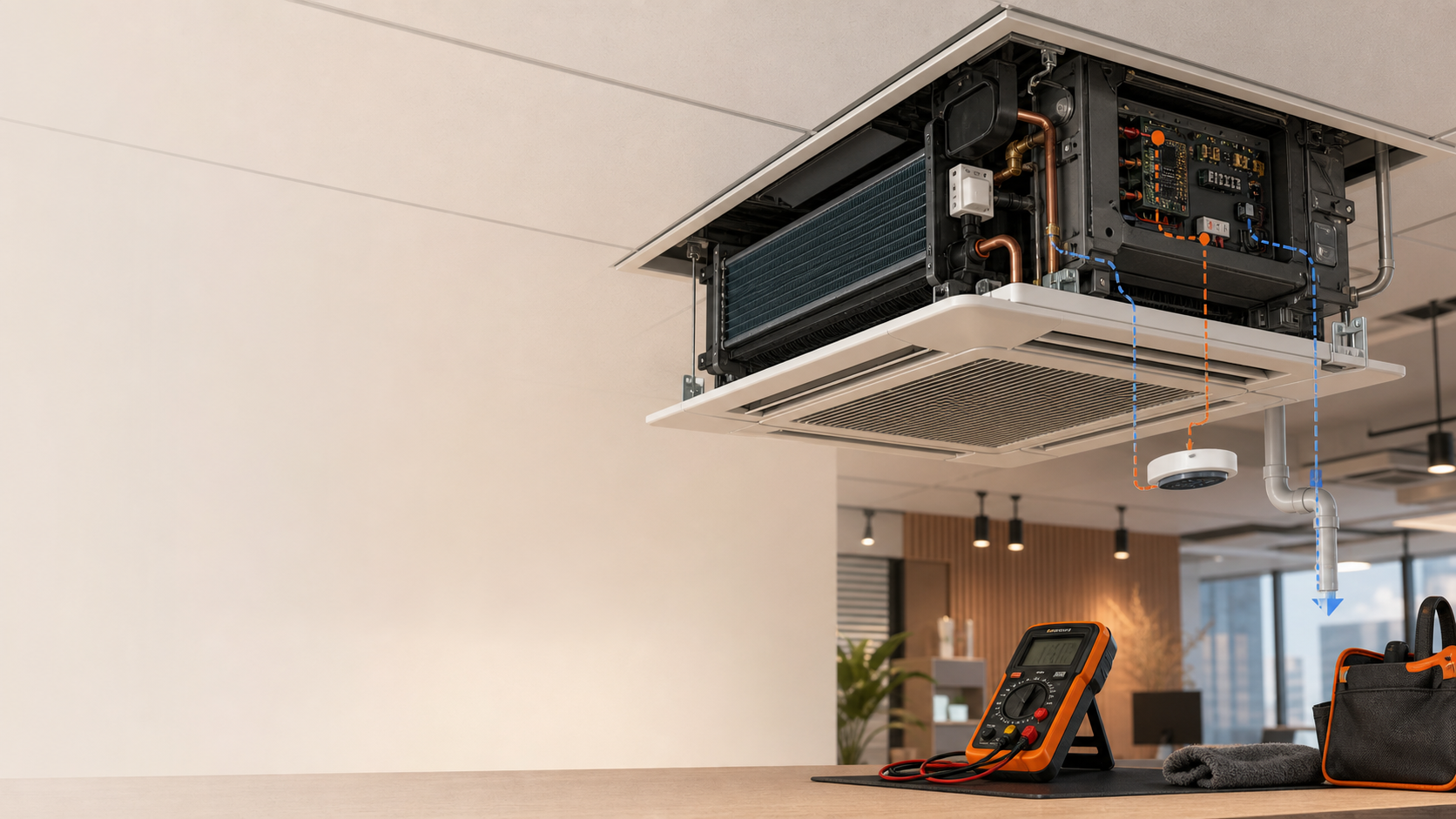
Commercial AC Repair
Poor cooling, tripping, leaks, abnormal noise or a unit that will not start needs fault assessment.
View repair support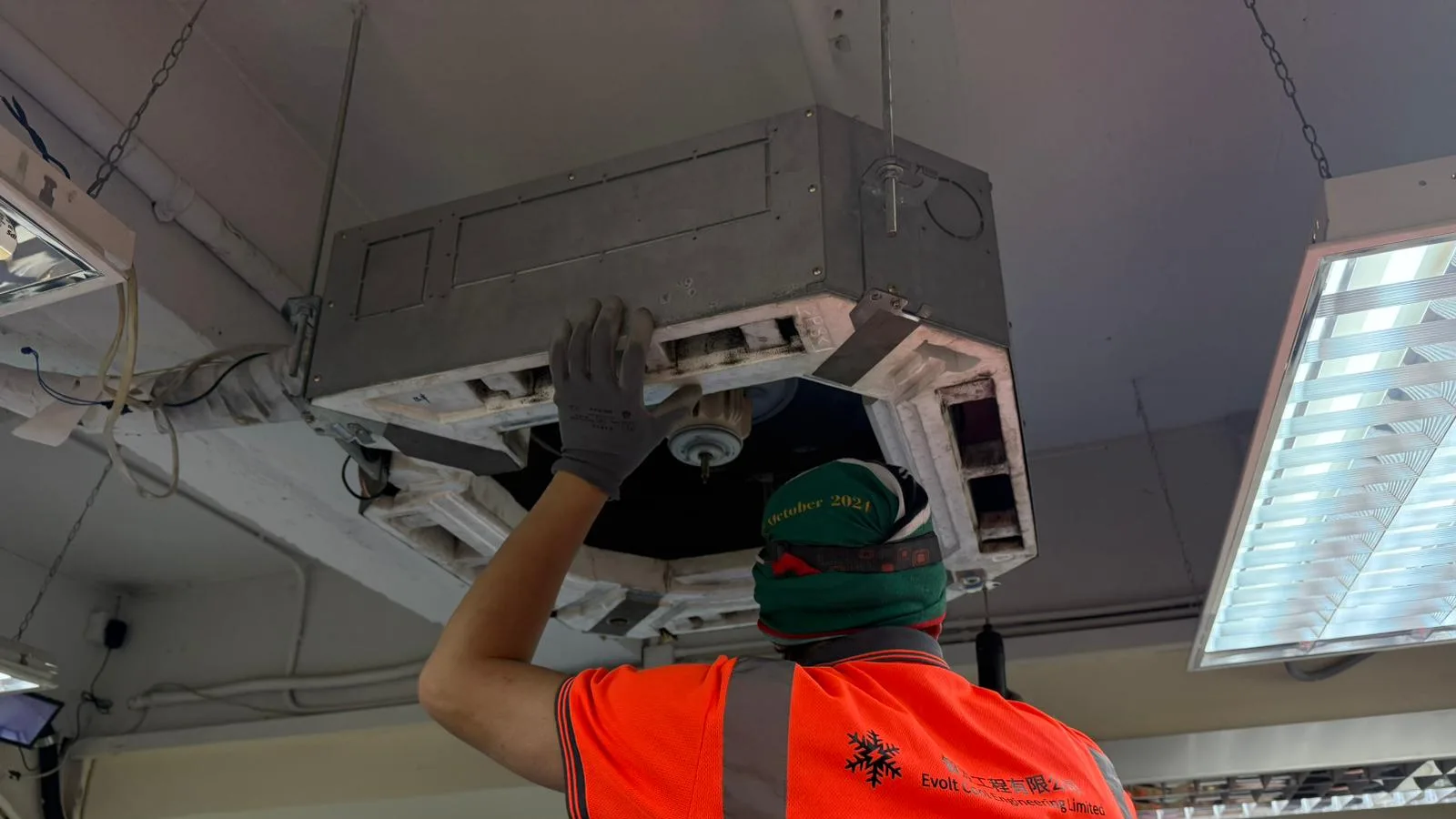
Evolt Care Maintenance Plans
Plan recurring work and additional items around equipment, quantities, operations and site needs.
Explore maintenance plans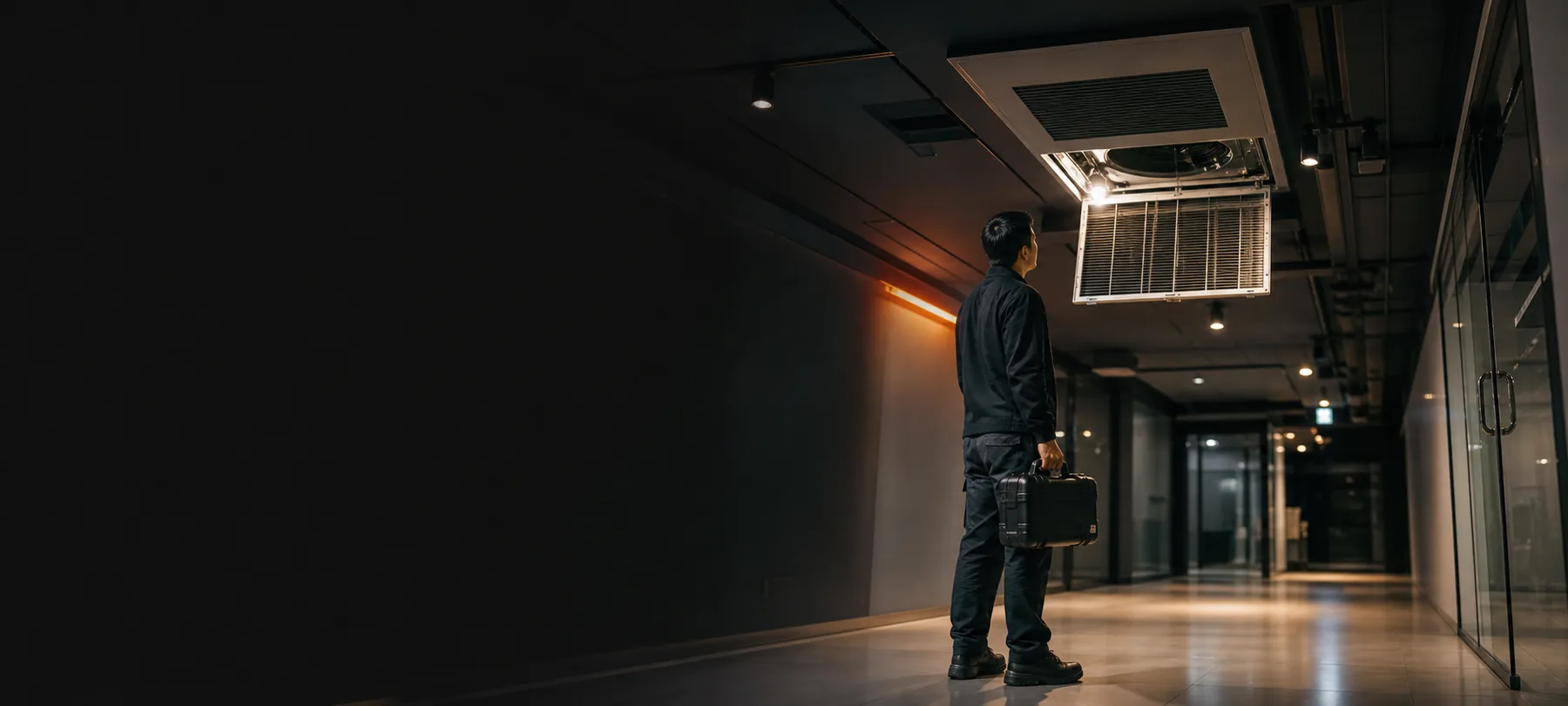
After-hours Engineering
For occupied or trading premises, provide the site arrangements and available work period.
See how work is arranged
Multi-site Equipment Planning
Bring site assets, priorities, site constraints and record requirements into one coordinated plan.
Learn about multi-site planningFour common questions before a window-unit cleaning enquiry
Can you quote from photographs alone?
Photographs help identify the unit, position, frame or sleeve and visible rear conditions. Unit weight, support condition, internal construction, power arrangement and working space still require confirmation. If information is missing, the quotation should state its assumptions or the checks still required.
Does cleaning always require the complete chassis to be removed?
No. Casing, grille, filter, coil, condensate and sleeve designs vary by model. Moving the chassis also involves weight, support and handling space. The need is confirmed against the manufacturer information, unit construction and site.
Is the outdoor section always included in ordinary cleaning?
No. Scope depends on whether the rear is safely reachable from indoors, whether façade or work-at-height access is needed, and how the surrounding area can be protected. The quotation should identify included and unreachable areas.
Will cleaning fix poor cooling, leakage or tripping?
Cleaning can reveal visible concerns, but it is not fault diagnosis. A unit with poor cooling, persistent leakage, tripping, a burning smell, abnormal noise or failed starting should not be repeatedly operated and needs the appropriate repair or specialist assessment.
Start with unit quantity, location and access
Tell Evolt Cool Engineering about the premises, number of window units, locations, models, rear-side access and available work period. We will use those details to confirm the quotation scope, items requiring separate assessment and next step. If another issue is found during cleaning, we will explain what can be followed up during the visit and what should be arranged separately for inspection or repair.