Knowledge Centre category

Commercial AC repair and fault guidance

Practical guidance on abnormal operation, repair enquiries, safe shutdown information, inspection sequence and post-repair checks when a commercial system leaks, makes unusual noise, loses cooling or stops running.

Articles and guides

Commercial AC repair and fault guidance

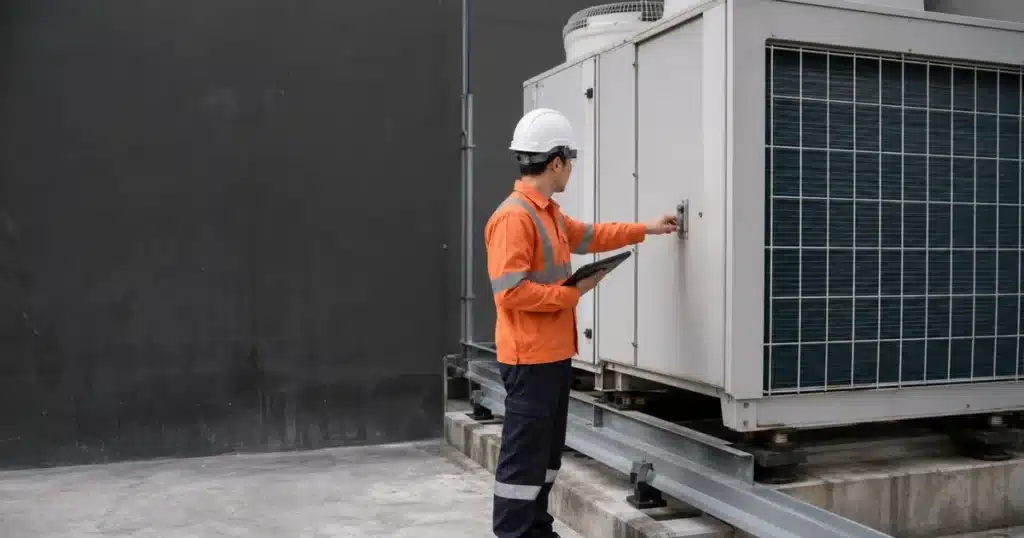
商用冷氣故障的現場安全檢查|可檢查範圍及禁止操作 / Air-conditioning Faults: Safe Checks for Site Staff

Air-conditioning Faults: Safe Checks for Site Staff

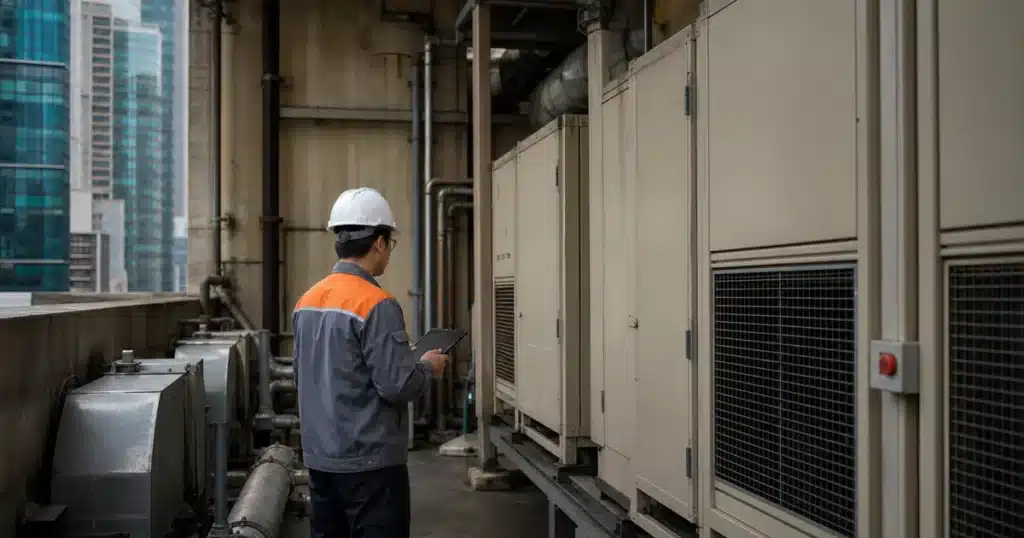
For an air-conditioning fault, site staff should observe only normally visible and safely accessible items: controller indications, blocked air paths, visible leakage, sound, smell and affected zones. Do not open panels, touch electricity, handle refrigerant, dismantle drains or work at height. Stop and escalate when safety warnings appear.
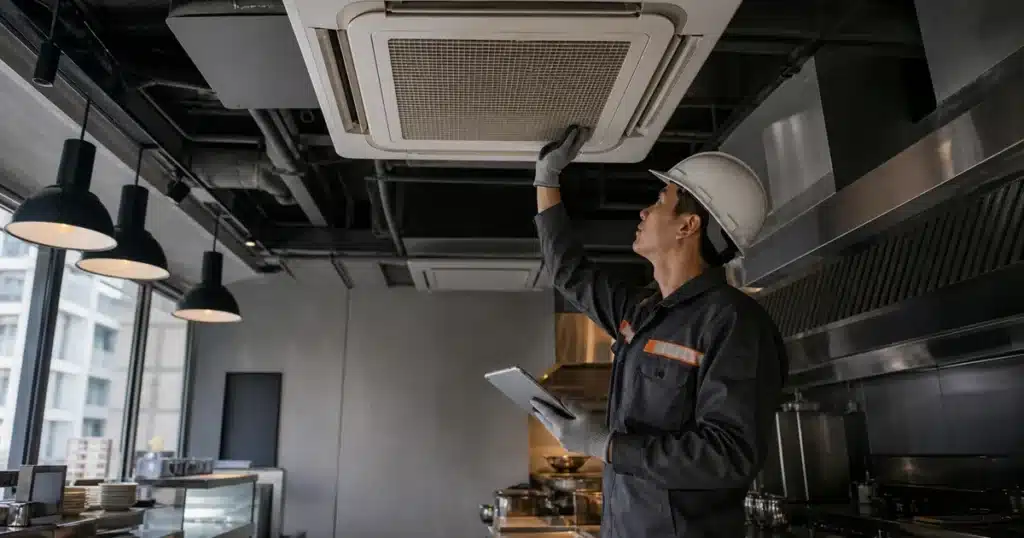
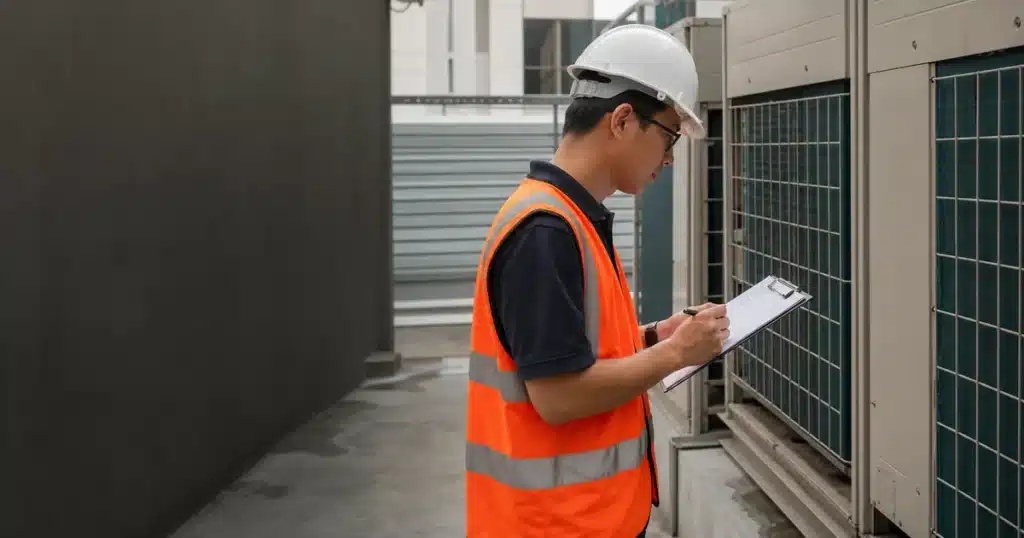
餐廳營業期間冷氣停機處理|營運維持及維修安排 / Restaurant Air-conditioning Breakdowns During Business Hours

Restaurant Air-conditioning Breakdowns During Business Hours

During a restaurant air-conditioning breakdown, first determine whether the dining area, kitchen or whole premises is affected. Manage people, indoor heat, food and access risks before recording the controller, equipment and shutdown timing. Do not repeatedly restart; trips, smoke, burning smells or leakage require immediate escalation.

VRV 錯誤碼上報及跟進指南|現場應記錄的資料 / VRV Error Code Escalation Guide

VRV Error Code Escalation Guide

A VRV error code is a fault-reporting clue, not a complete diagnosis. Report the brand, model or series, controller photograph, full code, affected indoor units or zones, timing, restart result and recent work. Do not dismantle equipment or repeatedly reset it from an online code table.

商用冷氣自動停機|保護停機、控制問題與高溫告警如何分 / Understanding Automatic Air-conditioning Shutdowns

Understanding Automatic Air-conditioning Shutdowns

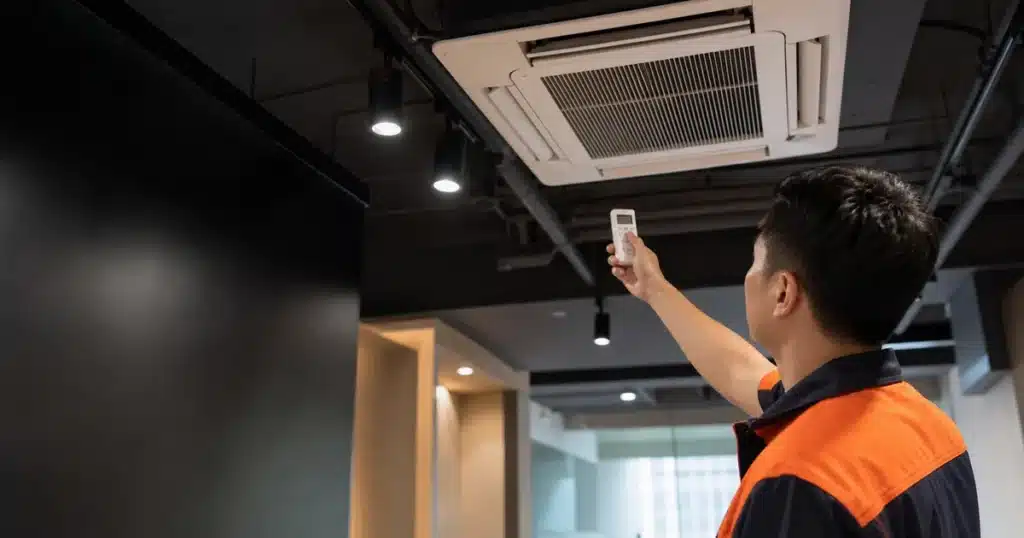
Automatic air-conditioning shutdown may come from schedules, control settings, protective operation, electricity or an equipment fault. Site staff should record timing, affected zones, controller indications and recurrence without repeated restarts. A trip, smoke, burning smell or leakage requires shutdown and escalation.

冷氣跳掣後的安全處理|配電及設備故障界線 / Air-conditioning Circuit Breaker Trips: Safety Checks

Air-conditioning Circuit Breaker Trips: Safety Checks

Do not repeatedly reset a breaker after an air-conditioning trip. Stop the affected equipment, restrict access to the electrical location and record which device tripped, when it happened, the affected areas and any burning smell, smoke, leakage or abnormal noise. Arrange review by the appropriate electrical and air-conditioning personnel.

商用冷氣漏水的初步排查|天花滴水、去水及營運風險 / Initial Checks for Commercial Air-conditioning Water Leaks

Initial Checks for Commercial Air-conditioning Water Leaks

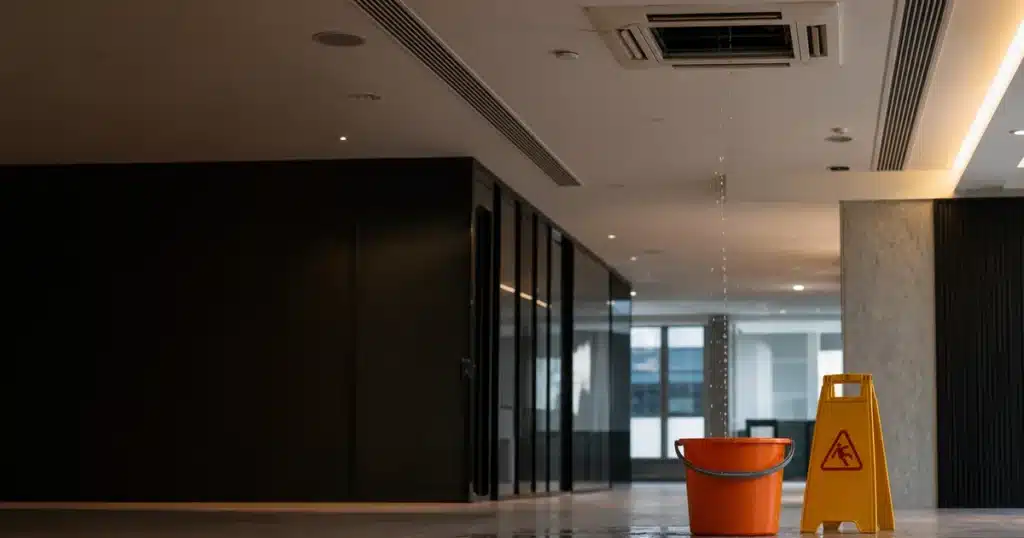
For a commercial air-conditioning water leak, first protect people, stock, ceilings and nearby electrical equipment, then record the source, timing and affected area. Site staff should observe only normally visible locations and should not dismantle drains or equipment. Persistent, worsening or electrically hazardous leakage needs prompt shutdown and escalation.

商用冷氣製冷不足的初步安全檢查|現場人員可檢查的範圍 / Initial Safety Checks for Commercial Air-conditioning Cooling Problems

Initial Safety Checks for Commercial Air-conditioning Cooling Problems

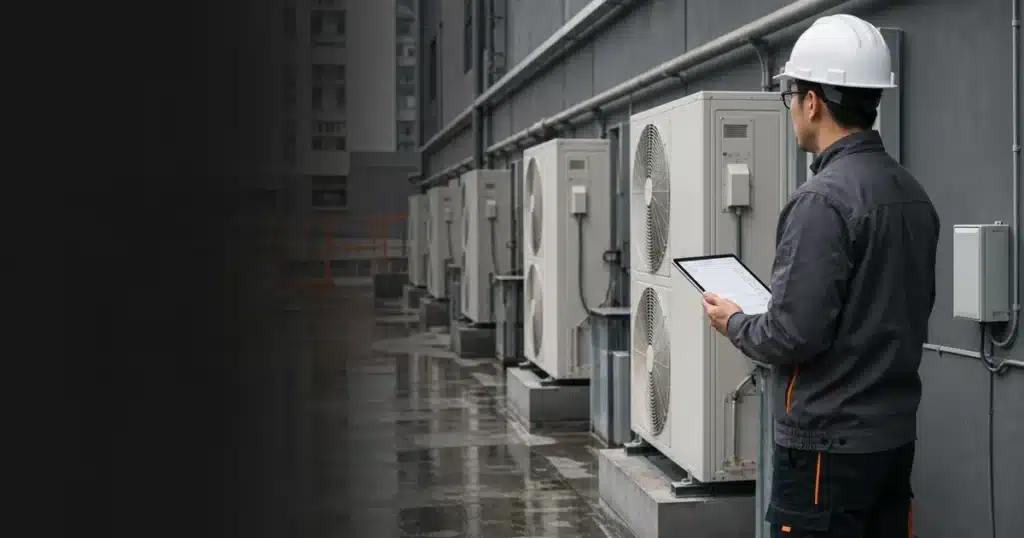
When commercial air-conditioning is not cooling properly, site staff can record affected zones, controller indications, settings, operating time, blocked supply or return paths and recent work. Do not open panels, handle refrigerant or repeatedly restart the system. Tripping, burning smells, smoke or abnormal noise require shutdown and escalation.

Talk through the site requirements

Need help assessing the next step for your premises?

Share the premises, equipment type, quantity, photos and available work period. Evolt Cool Engineering can then confirm what information is needed for the enquiry.

Scroll to Top