
Multi-zone air conditioning for Hong Kong commercial sites
VRV / VRF System Inspection, Maintenance and Upgrades
When zones behave differently, alarms recur, controls no longer match the site, or an upgrade is being planned, start with the installed units, zone map, controllers, records and operating constraints before choosing the next step.
Concept image of a VRV/VRF installation; not a record of a customer project.
Outdoor units, indoor units, branches, controllers and site labels need to match.
An alarm code or controller screen is evidence, not a complete diagnosis.
One task affects several zones through shared outdoor plant or controls.
Models, refrigerant, pipework, branch devices and controls shape upgrade options.
Look beyond one unit when the equipment is connected
A VRV or VRF system links indoor units, outdoor plant, refrigerant pipework and controls. A problem noticed in one room can depend on settings, components or shared equipment elsewhere.
Zones are consistently too warm or too cold
Compare when complaints occur with operating hours, modes, zone grouping and the equipment serving each area.
Alarms or shutdowns keep returning
Record the code, date, time, affected zones and operating conditions instead of repeatedly resetting the system.
Maintenance records do not join up
Missing asset labels, controller details, drawings or open actions make later inspection and quotation work slower.
The layout or operating hours are changing
A fit-out, new tenant, longer trading day or different heat load can no longer suit the original zoning and control strategy.
Controller schedules conflict with site use
Local controllers, central schedules and BMS commands can overlap; establish control ownership before making changes.
A partial or phased upgrade is being considered
Check model generations, refrigerant, pipework and shared controls before deciding what can remain in service.
VRV/VRF is a multi-zone network, not a row of independent units
VRF is the generic industry term, while VRV is a familiar market name. Heat-pump and heat-recovery layouts, branch components, piping limits and control features still depend on the installed make and model.
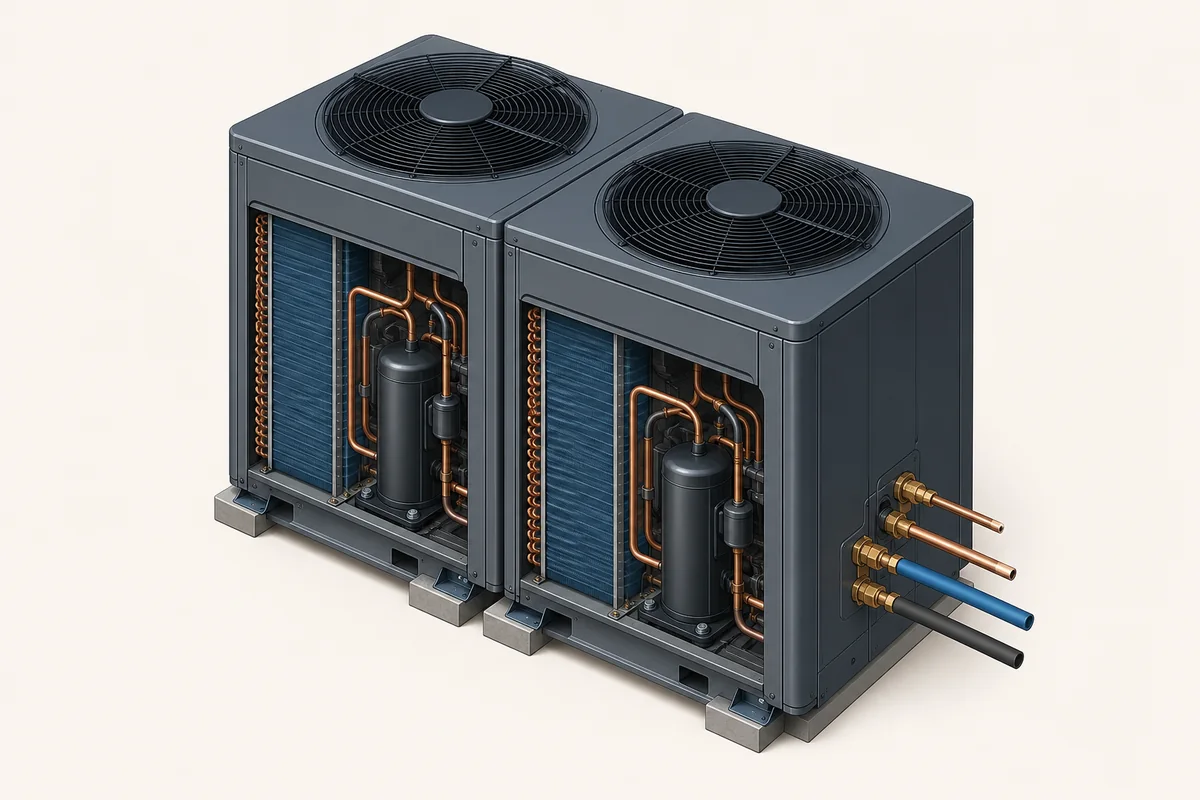
Outdoor plant
One outdoor unit or an approved modular combination varies capacity with system demand.
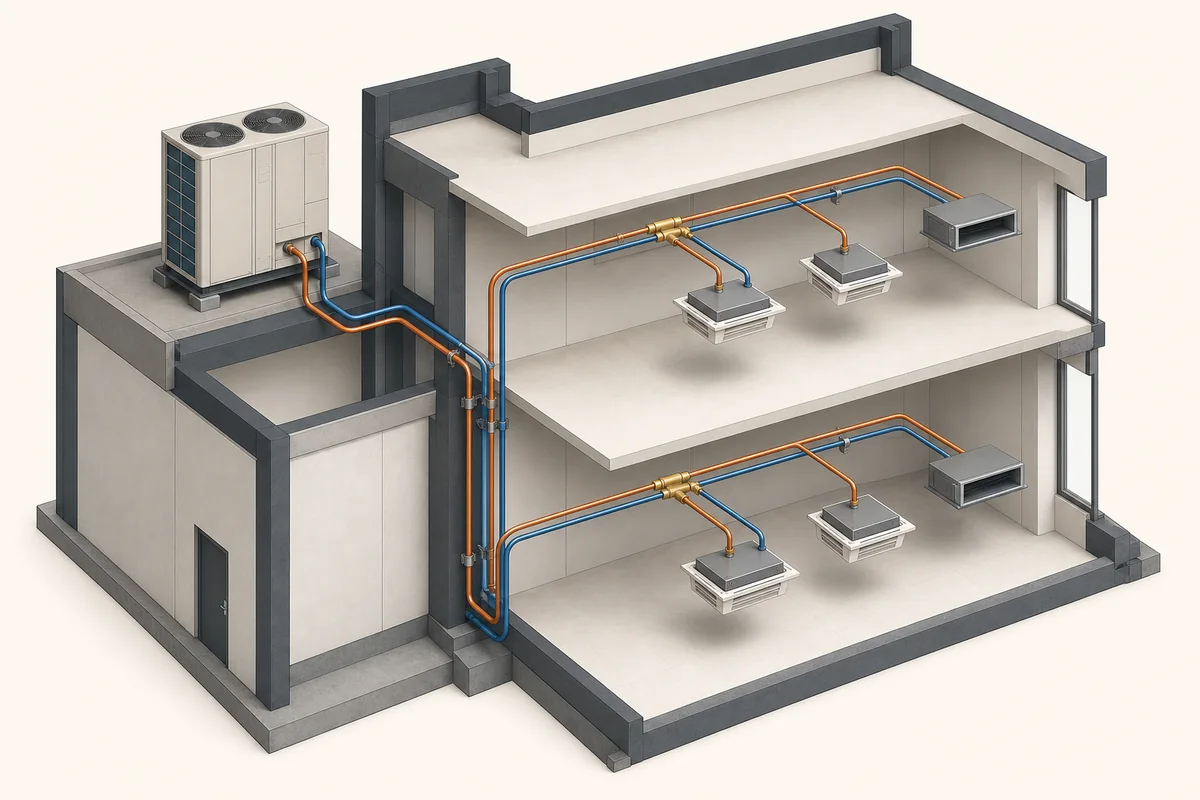
Refrigerant and branch network
Pipe sizes, lengths, elevation limits and branch arrangements follow the specific system design.
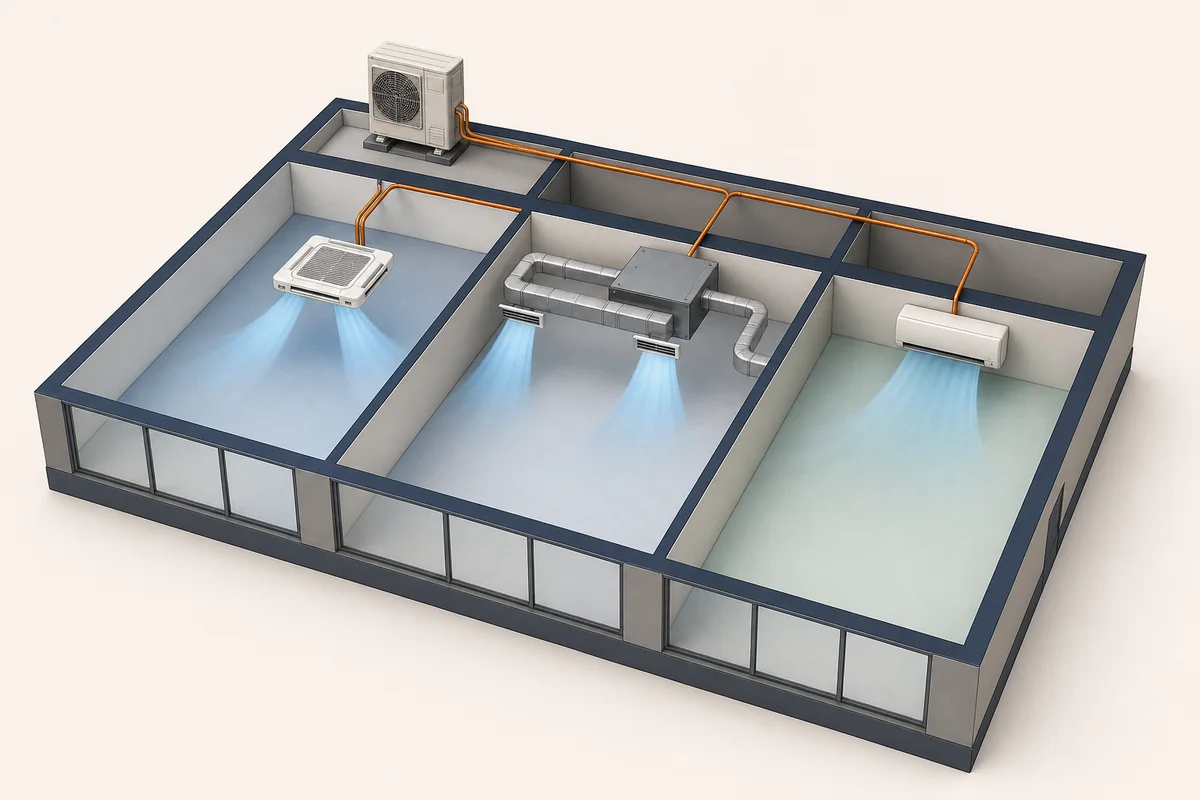
Indoor units and zones
Cassette, ducted, wall-mounted and other terminals are grouped around the site and control strategy.
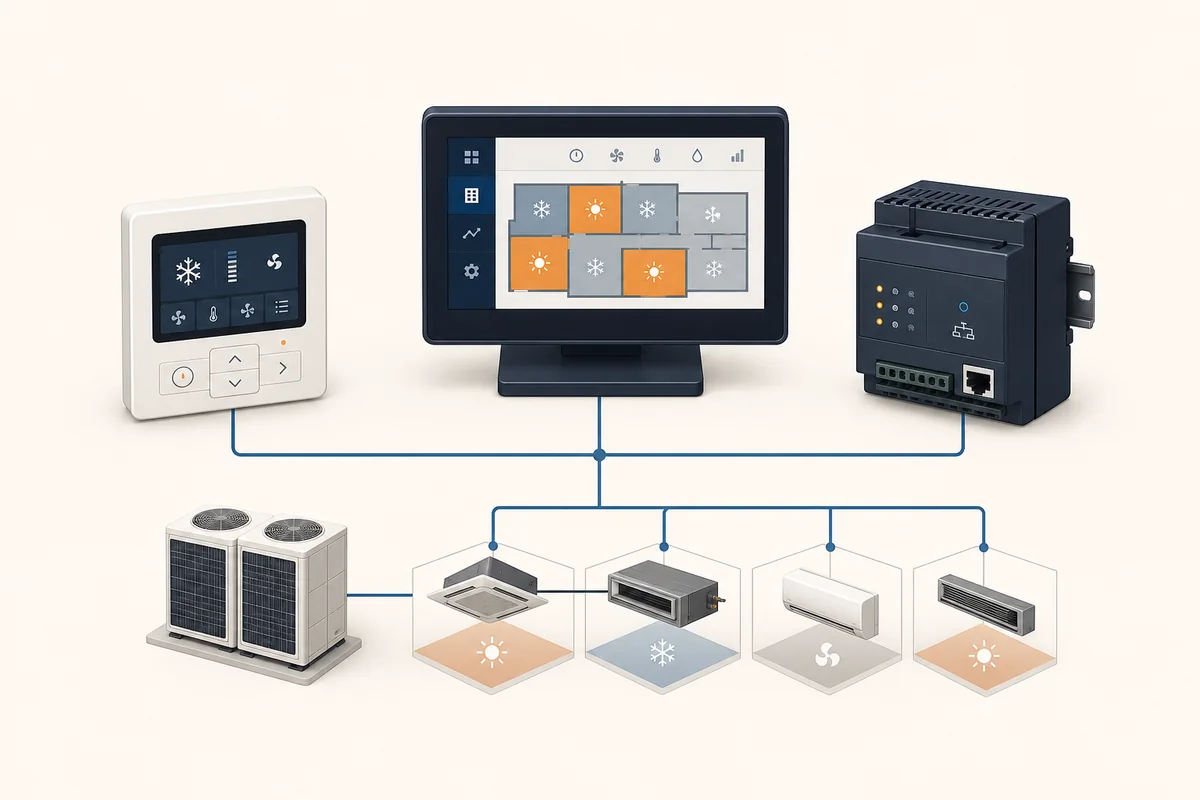
Controllers and interfaces
Local and central controllers share addresses and communications; wider BMS work remains a separate scope.
The illustrations explain the system relationships; they are not records of a customer project.
A “zone” can mean several things: room labels, controller groups, refrigerant circuits and BMS graphics do not always match. Reconcile the names with the physical equipment before changing settings or planning a shutdown.
Assessment, maintenance, repair, controls and cleaning
address different needs
Start with the service closest to the current need. If records are incomplete or the cause is unclear, send photographs of the equipment label, controller, affected zone and operating pattern.
Build a reliable picture before choosing the work
For multi-zone issues, incomplete handover records, control conflicts or pre-change review.
Share the system informationSet up recurring visits, records and plan governance
Configure work around the actual equipment, quantities, operating needs and your requirements.
Explore Evolt CareAn alarm, shutdown or operating fault is active
Record the symptoms and affected areas, then learn about diagnosis and corrective work through the repair service.
Learn about commercial AC repairCompare repair, partial renewal and replacement
Review compatibility, parts support, shutdown impact, future use and project constraints.
Learn about replacement and upgradesTrends, automation or integration
extend beyond the native system
Native VRV/VRF controls stay with the system assessment; broader building-level integration is covered by the BMS service.
Explore BMS and automationMultiple units need cleaning and shutdown coordination
Use the commercial AC cleaning overview to define the work by indoor-unit form, access arrangements and available work period.
Learn about commercial AC cleaning
Before changing a setting, establish what controls what
Local controllers, central schedules, user permissions and a BMS interface can all influence the same system. Map the equipment addresses, zone names and control priority before making a recorded change that can be reversed if needed.
- Zone and asset relationshipWhich controller relates to each indoor unit, outdoor system and occupied area.
- Operating hours and exceptionsWeekdays, holidays, extended trading, after-hours use and continuously occupied areas.
- Control ownershipLocal commands, central schedules, mode permissions, temporary overrides and BMS priority.
- Shutdown and restartAffected areas, notice, isolation authority, restart order, observation and open actions.
Need broader integration? When the scope includes cross-system trends, BMS gateways, building automation or central monitoring, learn about BMS and automation.
A system assessment separates confirmed facts,
items to verify and decisions requiring approval
The scope depends on the installed system, safe access and the way the site operates. Not every enquiry needs immediate dismantling or the same set of tests.
- 01
Organise the available records
Models, zones, controllers, drawings, alarms and maintenance history, with the source of each item identified.
- 02
Define the problem and impact
Separate comfort, controls, faults, maintenance, alteration and replacement needs, including zones that cannot stop.
- 03
Agree the checks and tests
Select observations, measurements, specialist trades, safety arrangements and any site inspection around the question.
- 04
Record findings and next actions
State confirmed findings, limitations, open items, the next step and decisions requiring your written approval.
Partial renewal is more than matching nominal capacity
Indoor units, outdoor modules, branch components, refrigerant pipework, controllers and communication generations depend on one another. Even one-zone work needs a compatibility review and a controlled restart plan.

Models and system generation
Confirm that outdoor modules, indoor units, branch devices, controllers and software form an approved combination.
Refrigerant and pipe condition
Pipe sizes, lengths, elevations, branches, insulation, contamination and test condition all need evidence.
Controls and BMS interface
Addresses, point lists, gateways, licences and graphics cannot be assumed to migrate unchanged.
Access and operating constraints
Lifting, ceilings, power, phased shutdowns, temporary arrangements, restart and handover shape the work plan.
Start the first conversation with the available records
You do not need to diagnose the fault. Safe photographs of equipment label, controllers and affected areas can show what information is still needed and whether a site inspection should follow.
- Site and objectiveSite type, location, contact and whether the need concerns assessment, maintenance, a fault, controls or an upgrade.
- Units and zonesApproximate indoor and outdoor unit counts, affected floors or areas, and safe equipment label photo.
- Alarm and operating patternCode, start time, continuous or intermittent behaviour, affected areas and business impact.
- Hours and accessTrading hours, critical zones, available work period and ceiling, roof or plant access restrictions.
- Existing recordsDrawings, equipment schedules, maintenance or repair history, controller details and open items where available.
VRV/VRF system FAQ
Are VRV and VRF two completely different systems?
VRF is the generic industry term, while VRV is a familiar market name. Both can refer to variable-refrigerant-flow multi-zone systems, but heat-pump or heat-recovery layouts, branch devices, controls and compatibility rules depend on the installed make and model.
Can I enquire without complete model details or system drawings?
Yes. Begin with the site, approximate indoor and outdoor unit counts, affected zones, and safe photographs of the equipment label and controller. Equipment mapping or a site inspection can be discussed if further details need confirmation.
Does a fault in one zone mean the whole system must stop?
Whether the whole system must stop is determined after mapping the shared outdoor plant, branch devices, power and controls. Do not assume that the fault is isolated to one zone.
Can old indoor units, refrigerant pipes or controllers stay in use?
Continued use is confirmed from the exact models, system generation, refrigerant, pipe specification and condition, branch arrangement, controls and communication version. Similar size or nominal capacity does not establish compatibility.
How is an error code used during diagnosis?
An error code is one investigation input. Record the code, time, affected zones and operating condition, then learn about the repair service for inspection. Repeated resets should be avoided while the cause remains under investigation.
How is VRV/VRF maintenance different from multi-unit cleaning?
Maintenance covers agreed inspection, servicing and records. Cleaning has its own scope for each indoor-unit form, accessible components, protection, water handling and handover. Diagnosis, refrigerant, electrical and controls work are assessed separately where required.
Will a schedule or set-point change always save energy?
No result should be assumed. A change needs a clear purpose, baseline, approval, observation period and rollback plan, followed by suitable data review.
Begin with a controller photograph, the affected zones
and the decision you need to make
Tell us whether the need concerns assessment, maintenance, a fault, controls or an upgrade, then share the equipment and site information already available. The installed system, access and operating constraints will shape the next step.