
From the plant room and water loops to terminal units and controls
Central Air-Conditioning and Chiller Inspection, Maintenance and Repair
For teams managing shopping centres, offices, care facilities, schools and other large commercial sites. When the chiller, pumps, water loops, AHUs, FCUs or controls can be contributing to a problem, organise the system boundary, operating records and shutdown constraints before deciding on an assessment, maintenance, repair or upgrade.
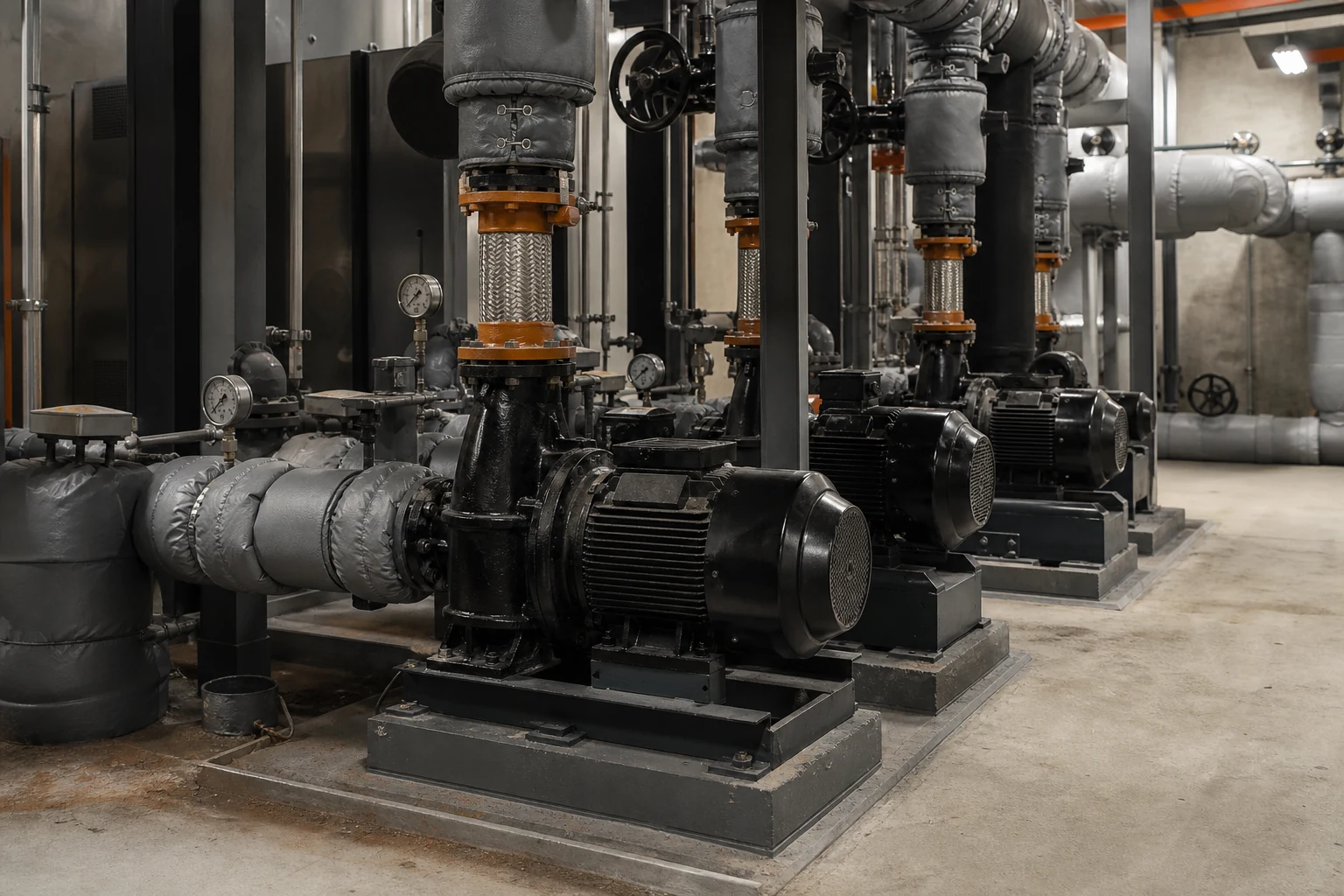
Concept image of a central chiller plant; not a record of a customer project.
Chillers, pumps, water loops, terminal units and control interfaces.
Alarms, temperatures, pressure, flow, run hours and fault history.
Service hours, access, isolation, shutdown, noise and phasing.
Tests, settings, changes, outstanding items and handover records.
A central-system enquiry rarely concerns one component alone
Plant and controls influence one another. Starting with the decision you need to make gives the enquiry more useful direction than reporting an error code on its own.
The asset picture is incomplete
Drawings, equipment schedules, control logic or alteration records are fragmented, so the installed plant, loops, terminal units and interfaces need to be reconciled.
Peak cooling or alarms keep returning
Load, flow, settings, staging, terminal demand or equipment condition can be involved. Repeated alarm resets do not establish a cause.
A maintenance contract or major repair is being scoped
Chillers, pumps, water loops, controls, cooling towers and other specialist responsibilities need clear quotation boundaries.
A phased upgrade or replacement is under review
Capacity, compatibility, temporary arrangements, isolation, restart and handover records matter while the site remains in operation.
Trace how cooling moves from the plant room to occupied areas
The installed arrangement depends on the site, equipment and alteration history. This map helps organise an enquiry; it does not replace site checks or manufacturer information.
Chillers and heat rejection
Record chiller quantities, models, capacities, run hours, alarms and availability. Treat water-cooled condenser pumps and cooling towers separately from air-cooled heat rejection.
Chilled-water pumps and loop
Pumps, valves, isolation points, differential pressure, flow and bypass arrangements carry chilled water through the building.
AHU and FCU terminal units
Coils, airflow, valves and zone demand affect the wider system. Terminal maintenance and cleaning need their own defined scope.
Controls and BMS interfaces
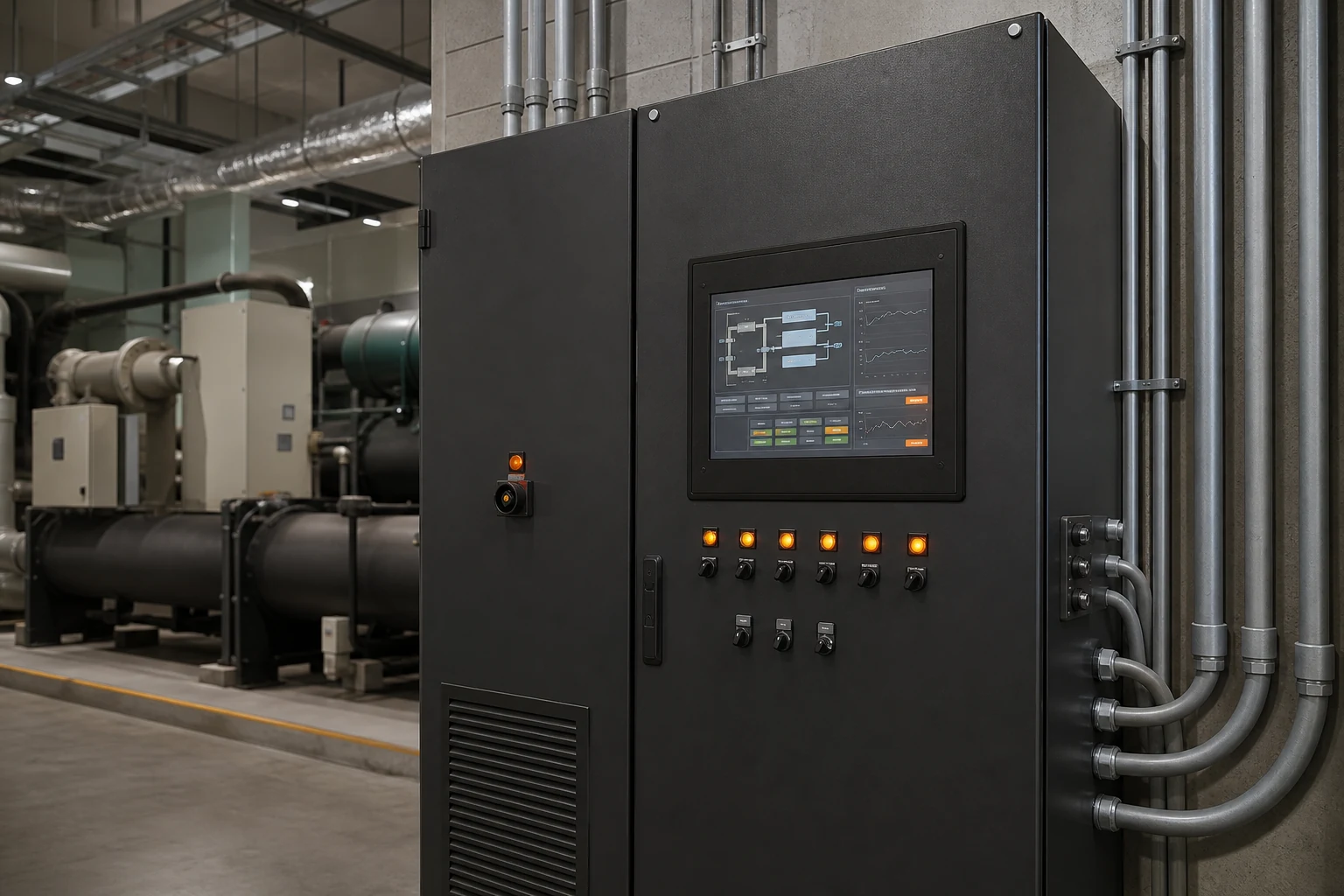
Set points, schedules, lead-lag sequence, alarms, overrides, shutdown and restart logic all influence operation.
Coordinate each part of the central-system work
One plant-room project can involve several disciplines. Related services can be coordinated while the quotation scope, method, qualifications and handover requirements remain clear.
Inspection, maintenance scope and records
Discuss a plan around the assets, operation, service hours and specialist boundaries.
View Evolt CareAlarms, shutdown or abnormal performance
Keep the alarm, time, operating condition and affected-area details before making a fault enquiry.
Learn about commercial AC repairCompare repair, partial replacement and system change
Review equipment condition, capacity, compatibility, operating constraints and handover needs.
Explore replacement and upgradesSupply, protection, isolation and control power
Check the distribution source, capacity, protection and shutdown plan before equipment is added or changed.
View electrical supporting worksBMS, schedules, trends and interfaces
Learn about the controls service where monitoring, control logic or cross-system interfaces need deeper attention.
Learn about BMS and controlsAHUs, PAUs and FCUs
Coils, airflow, valves, filters and terminal-unit work should follow the installed equipment and scope.
View AHU, PAU and FCU systemsA simple setting change can have consequences across the system
Plant staging, chilled-water temperatures, pump operation, differential pressure, bypasses, terminal valves and BMS schedules are connected. Any change needs a purpose, approval, observation method and a way back.
- Staging and loadCheck which chiller leads, when others enter or leave, and how the actual load changes.
- Flow and minimum requirementsPump speed, valves, bypasses and terminal demand belong in the same review, not one pressure or temperature reading alone.
- Alarms and overridesRecord the alarm conditions, actions already taken, active overrides and any setting not yet restored.
- Shutdown and restartDefine isolation, service impact, check points, restart sequence and the exit plan if an abnormal condition appears.
A few critical records make the quotation boundary much clearer
The information does not need to be complete on day one. Start with what is available and identify what remains unverified, what is running and what cannot be shut down.
- 01
Site and decision
Site use, service hours, the problem to solve, and whether you need assessment, maintenance, repair, upgrade or budget comparison.
- 02
Assets and system drawings
Chillers, pumps, towers, AHUs, FCUs, controls and electrical data, with available drawings, schedules and safely photographed equipment label.
- 03
Operating and fault records
Alarms, trends, run hours, temperatures, pressures, flow, maintenance and fault history, with the time period identified.
- 04
Access and shutdown conditions
Plant-room access, work permits, isolation, noise, service impact, available windows and phasing requirements.
- 05
Handover and documents
Required tests, reports, setting records, drawing updates, training or outstanding-item schedules.
Equipment age alone does not determine
whether a chiller should be replaced
Compare options against equipment condition, fault and maintenance history, actual load, controls compatibility, water-side conditions, electrical supply, space, construction phasing and operational impact.
What can remain
Check the condition, capacity and compatibility of the existing chillers, pumps, towers, terminal units and controls.
How service will continue
Compare available work period, temporary arrangements, zoning or phasing, and the restart sequence.
How the outcome will be checked
Define testing, settings, balancing, observation, documents and outstanding-item handling before work starts.
What needs measurement
Energy, capacity, performance or payback claims need a baseline and measurement method, not assumption alone.
Start with the site and plant information
even when drawings are incomplete
Separate what is known from what remains unverified, then add safely taken equipment label, control-screen or alarm information. We can use the submitted information to organise the enquiry boundary and identify what else is needed.
Central air-conditioning and chiller FAQ
What is the main difference between an air-cooled and water-cooled chiller?
An air-cooled chiller rejects heat directly to outdoor air. A water-cooled system also has condenser-water pumps, cooling towers and the related loop. Equipment, maintenance and specialist responsibilities should follow the installed arrangement.
Which system records can I provide for an initial enquiry?
Begin with the site use, approximate plant count, visible equipment label, control screens, affected areas and available records, then identify the details that still need checking.
Does clearing an alarm mean the fault has been resolved?
No. An alarm is an investigation input. Keep its time, operating condition, related readings, affected equipment and actions already taken, and avoid repeated resets that hide the pattern.
Will changing schedules or set points always save energy?
No result should be promised in advance. A change needs a defined purpose, baseline, approval, observation method and rollback plan, followed by suitable operating data.
Does central AC maintenance include cooling towers, water treatment and terminal cleaning?
That should not be assumed. Cooling towers, water treatment and testing, and AHU or FCU maintenance and cleaning each have their own equipment, methods, qualifications, records and handover requirements.
Does a successful restart prove system performance?
No. A restart describes the immediate condition. Capacity, balance, energy or long-term performance need appropriate testing, measurement, a baseline and an observation period.
Describe the site and current system,
together with the decision you need to make
Send the available asset schedule, schematic, alarms, operating records and shutdown constraints, and mark anything still unknown. The next step should follow the installed plant, specialist interfaces, access and operating conditions.