Evolt Cool Engineering Knowledge Centre

Knowledge Centre

The Evolt Cool Engineering Knowledge Centre gives Hong Kong facilities, property, operations and procurement teams practical guidance on commercial AC maintenance, repair, cleaning, upgrades, controls and project coordination, so they can prepare better enquiries and compare options for their premises.

Knowledge Centre topics

Browse 10 practical topics

Commercial AC maintenance and contract management Guidance for facilities, property and operations teams on maintenance scope, contract comparison, equipment records, service documentation and renewal checks when planning annual maintenance or coordinating requirements across premises. Explore category Commercial AC repair and fault guidance Practical guidance on abnormal operation, repair enquiries, safe shutdown information, inspection sequence and post-repair checks when a commercial system leaks, makes unusual noise, loses cooling or stops running. Explore category Installation, replacement and system upgrades Compares repair, partial replacement, full replacement and system upgrades across capacity, controls, electrical interfaces, work periods and completion acceptance, helping procurement and project teams define the requirement. Explore category Systems and equipment knowledge Introduces VRV and VRF, central air conditioning, AHU, PAU, FCU, controls and supporting interfaces commonly found in Hong Kong commercial premises, helping readers identify systems and prepare site information. Explore category BMS, electrical, controls and energy performance Explains BMS, controls, electrical distribution, measurement and energy-performance topics, including the equipment, data, responsibilities and test methods that facilities, engineering and procurement teams should confirm before improvement work. Explore category Procurement, quotations, tenders and project management Helps procurement, facilities and project teams structure quotation information, RFQs, tenders, work scope, comparison criteria, site coordination and acceptance records for commercial air-conditioning work. Explore category Industries and site planning Covers equipment, access, shutdown, protection and service planning for offices, retail, schools, clinics, care premises, food and beverage sites, industrial buildings and multi-site operations. Explore category Cases, seasonal planning and decision FAQs Uses verifiable information, seasonal preparation and common decision questions to explain when maintenance, repair, cleaning, replacement or further checks may be relevant, without presenting unapproved client or project details as cases. Explore category Commercial AC cleaning and completion acceptance Covers cleaning scope by equipment type, site protection, isolation, quoted components, refitting, basic operating checks and completion acceptance records, helping teams prepare one coordinated enquiry for the same premises. Explore category Central systems and cooling towers Explains maintenance, cleaning, records and responsibility interfaces for central air conditioning, chillers, AHU, PAU, FCU and cooling towers, while keeping ordinary equipment, ductwork and cooling-tower requirements distinct. Explore category

Articles and guides

Latest Knowledge Centre articles

冷氣保養前如何建立設備資產清單|實用欄位及資料要求 / HVAC Asset Register for Maintenance

HVAC Asset Register for Maintenance

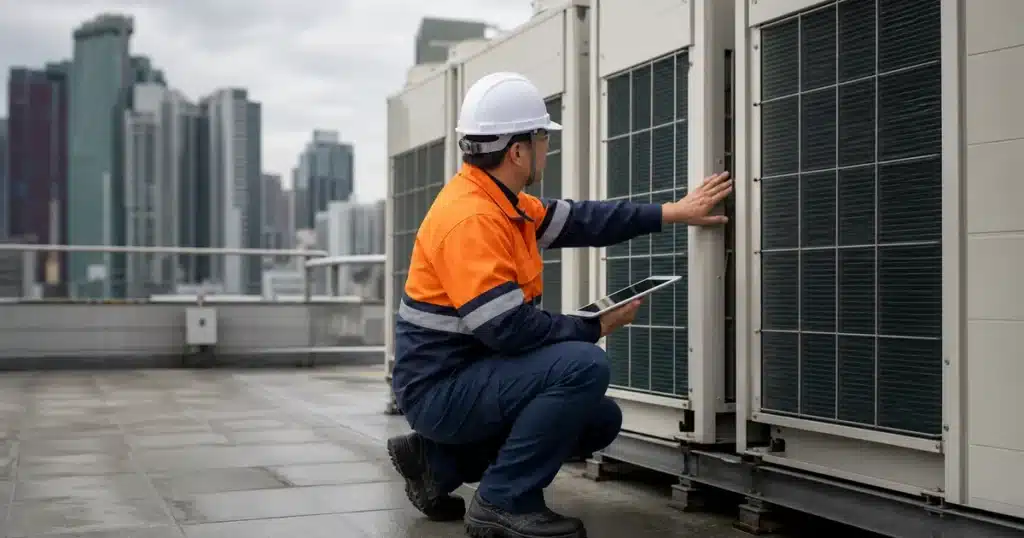
Before maintenance, an air-conditioning asset register should at least contain site, floor or zone, equipment type, location, quantity, control group, latest maintenance date and fault status. Add models, photographs, drawings, isolation references and document links as the register matures. Start with data that can be updated and matched on site.
定期保養年曆如何編排|香港商業場地的全年保養節奏 / Planned Air-conditioning Maintenance Calendar for Hong Kong Commercial Sites

Planned Air-conditioning Maintenance Calendar for Hong Kong Commercial Sites

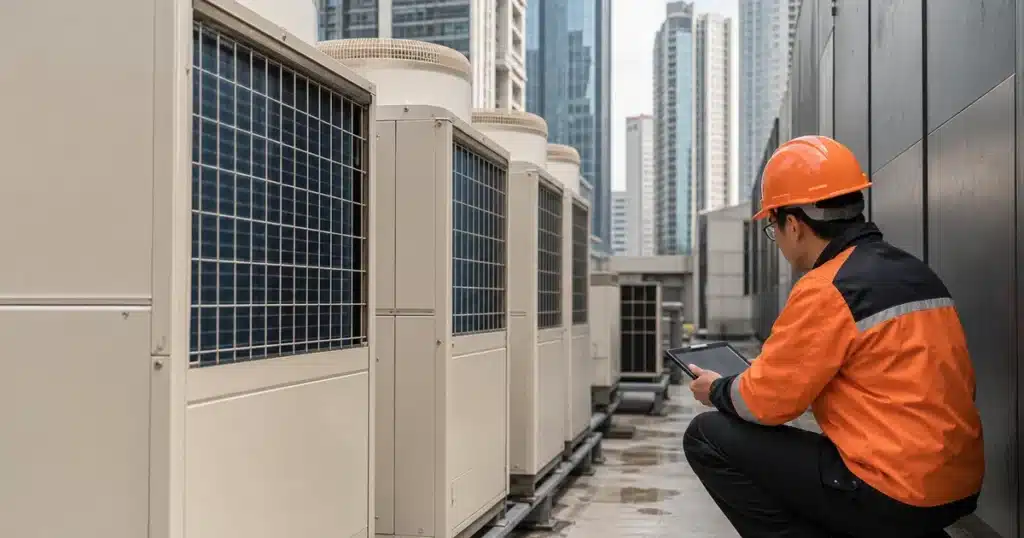
A planned maintenance calendar should combine equipment, premises, seasonal risk, available work periods and open items. Review complaints and alarms monthly, schedule equipment work at suitable intervals, address critical risks before peak season and assess recurring faults afterwards. Dates may change, but ownership and records must remain continuous.

VRV 與 VRF 有甚麼分別|香港採購人員需要掌握的重點 / VRV vs VRF: What Hong Kong Buyers Need to Know

VRV vs VRF: What Hong Kong Buyers Need to Know

VRV and VRF generally describe the same family of multi-split air-conditioning technology. VRF is the generic term; VRV is Daikin’s trademarked term. When comparing quotations or reporting faults in Hong Kong, use the brand, series, configuration, controls and equipment group rather than inferring performance from the abbreviation alone.

商用冷氣選型應考慮甚麼|匹數以外的主要因素 / Commercial Air-conditioning Selection Factors

Commercial Air-conditioning Selection Factors

Commercial air-conditioning selection needs occupancy and hours, room use, zoning, outdoor air and heat rejection, outdoor-unit and drainage locations, electrical capacity, noise, service access, shutdown tolerance and future change. Floor area or equipment price alone is not enough.

商用冷氣故障的現場安全檢查|可檢查範圍及禁止操作 / Air-conditioning Faults: Safe Checks for Site Staff

Air-conditioning Faults: Safe Checks for Site Staff

For an air-conditioning fault, site staff should observe only normally visible and safely accessible items: controller indications, blocked air paths, visible leakage, sound, smell and affected zones. Do not open panels, touch electricity, handle refrigerant, dismantle drains or work at height. Stop and escalate when safety warnings appear.

餐廳營業期間冷氣停機處理|營運維持及維修安排 / Restaurant Air-conditioning Breakdowns During Business Hours

Restaurant Air-conditioning Breakdowns During Business Hours

During a restaurant air-conditioning breakdown, first determine whether the dining area, kitchen or whole premises is affected. Manage people, indoor heat, food and access risks before recording the controller, equipment and shutdown timing. Do not repeatedly restart; trips, smoke, burning smells or leakage require immediate escalation.

VRV 錯誤碼上報及跟進指南|現場應記錄的資料 / VRV Error Code Escalation Guide

VRV Error Code Escalation Guide

A VRV error code is a fault-reporting clue, not a complete diagnosis. Report the brand, model or series, controller photograph, full code, affected indoor units or zones, timing, restart result and recent work. Do not dismantle equipment or repeatedly reset it from an online code table.

商用冷氣自動停機|保護停機、控制問題與高溫告警如何分 / Understanding Automatic Air-conditioning Shutdowns

Understanding Automatic Air-conditioning Shutdowns

Automatic air-conditioning shutdown may come from schedules, control settings, protective operation, electricity or an equipment fault. Site staff should record timing, affected zones, controller indications and recurrence without repeated restarts. A trip, smoke, burning smell or leakage requires shutdown and escalation.

夏季前商用冷氣預防性檢查|首30日優先項目 / Pre-summer Air-conditioning Checks for Commercial Sites

Pre-summer Air-conditioning Checks for Commercial Sites

Pre-summer checks should begin with the previous peak season’s complaints, leakage, alarms and downtime. Plan filter, coil, drainage, electrical, controls and test-running work around critical areas. If time is limited, address safety, high-dependency and recurring issues first.

更換保養供應商如何交接|資料、欠項、風險與開局 30 日安排 / Changing Maintenance Contractors: Handover Checklist

Changing Maintenance Contractors: Handover Checklist

When changing air-conditioning maintenance contractors, transfer the site and equipment lists, recent reports, open faults, quotations, parts, controls information and access rules. During the first month, the incoming contractor should verify critical assets and record gaps rather than assume that old information is complete or every open item is included.

Talk through the site requirements

Need help assessing the next step for your premises?

Share the premises, equipment type, quantity, photos and available work period. Evolt Cool Engineering can then confirm what information is needed for the enquiry.

Scroll to Top