
Air-side and terminal equipment for commercial buildings
AHU, PAU and FCU System Support
When airflow drops, zones run unevenly, condensate appears or fresh-air performance is in question, Evolt Cool Engineering can review the equipment, served areas, access constraints and available records with you. We then define whether the next step is maintenance, fault support, cleaning or an upgrade.
The image above shows a general AHU plant-room concept, not a record of a customer project.
Usually installed in a plant room to filter, cool and move return and outdoor air across a larger served area.
Focuses on incoming outdoor air, so intake location, filters, coils, airflow and controls all matter.
Serves a room or zone, often above a ceiling or inside a cabinet, with a coil, fan, drain and local controls.
Share safe photos of the casing, equipment label, controller and location. There is no need to remove a cover.
Start with the systems overviewWhere the symptom appears is only the first clue
The same issue can involve the air path, chilled-water branch, condensate drain, controls or the way a space is being used. A clear record of the affected area and timing is more useful than trying to diagnose from one photo.
Weak airflow or uneven temperatures
Note the rooms, times and operating conditions where the problem is most noticeable, plus any relevant unit or controller details.
Fresh-air, stuffiness or odour concerns
Outdoor-air intake, occupancy, operating hours, airflow and other possible sources can all need to be considered.
Drips or water marks above a ceiling
Protect the affected area and record the timing and location. Drains, coils, valves and operating conditions still need proper checks.
More noise or vibration than usual
Record when it happens, whether it is continuous and where it is loudest. Do not open a fan or equipment panel yourself.
Repeated faults or recurring complaints
Link each event, action and open item back to the affected asset and location rather than relying on scattered messages.
Maintenance, refurbishment or a change of use
Review the served areas, operating hours, equipment condition, controls and possible available work period before comparing options.
Central air handling and local zone units have different jobs
Equipment names help the conversation, but the installed arrangement still needs to be checked against labels, drawings, ductwork, chilled-water connections and controls. One building can use all three equipment types.
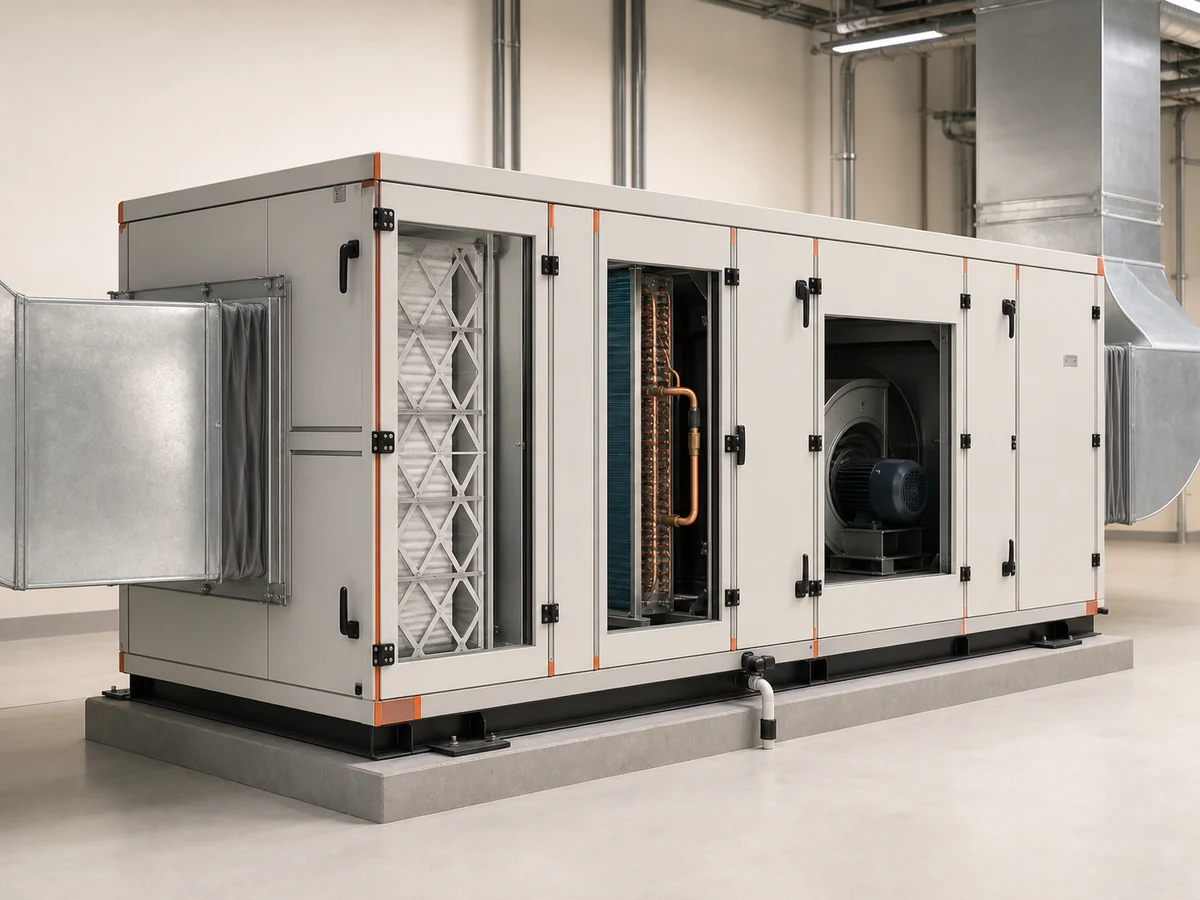
AHU: handles air for a larger area
Typical interfaces include filters, coils, fans, motors, dampers, condensate drainage and the supply and return air paths.
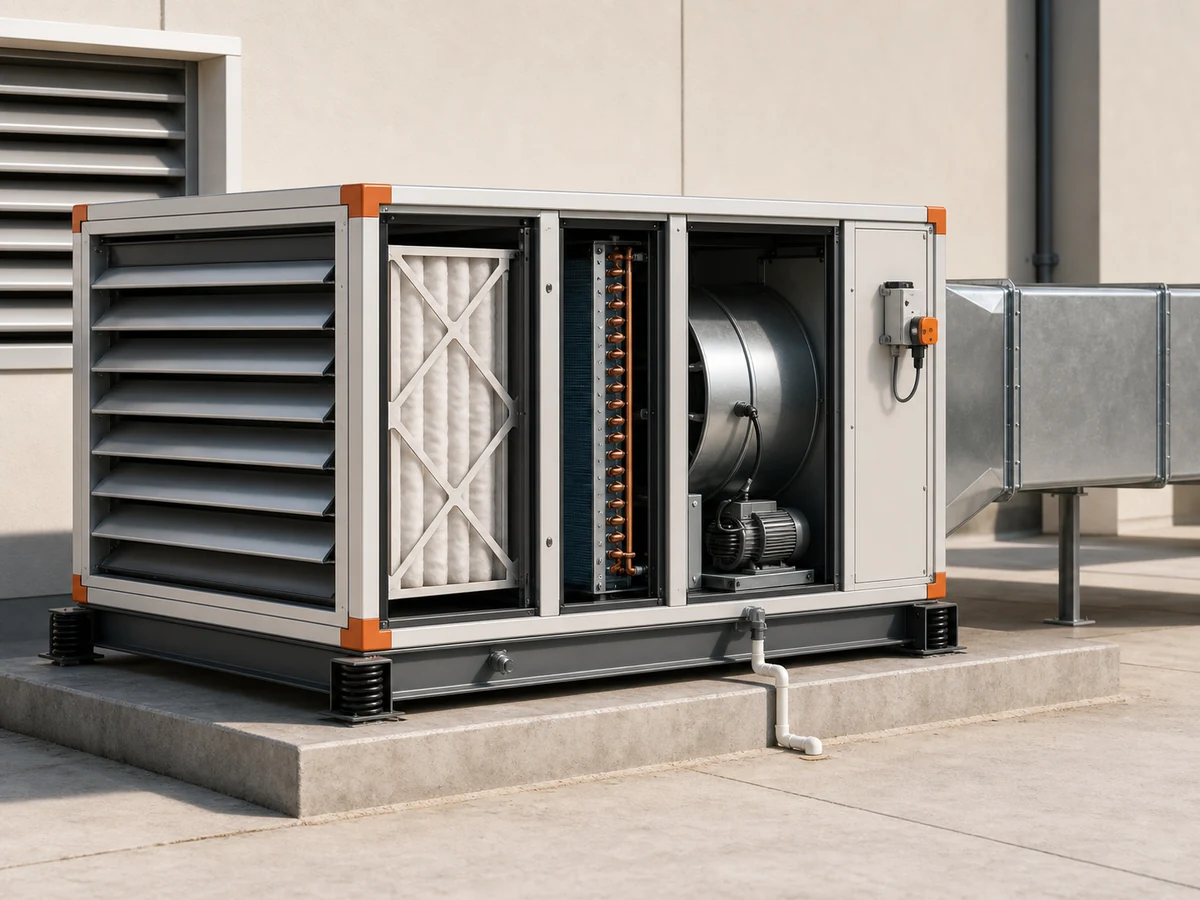
PAU: conditions incoming fresh air
Alongside filters, coils and fans, the intake position, outdoor-air quantity, operating hours, dampers and controls affect the brief.
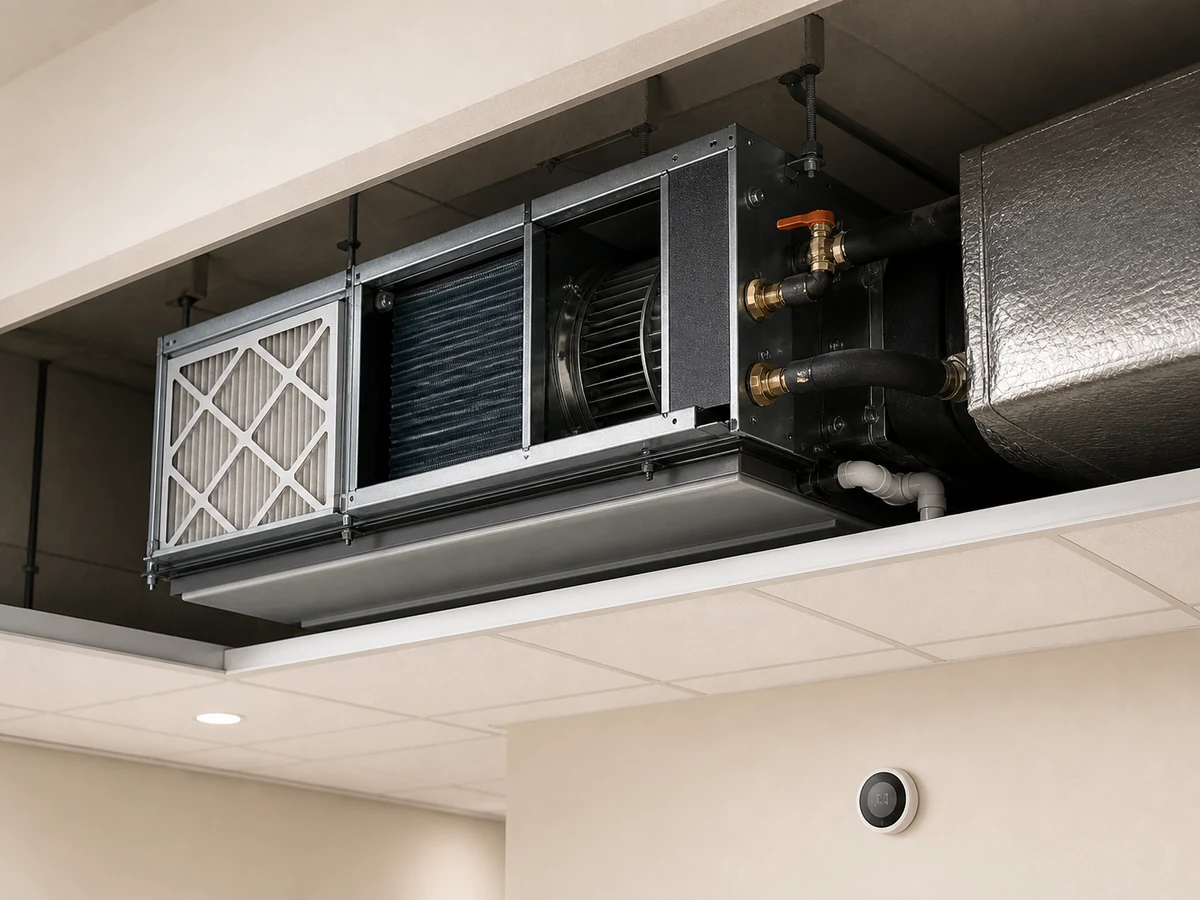
FCU: circulates and cools air locally
Often hidden above a ceiling or inside a cabinet, with access to the coil, fan, drain, valves and local controls shaping the work.
These images explain equipment roles and common interfaces. They are not Evolt Cool Engineering customer, project or site records.
An AHU, PAU or FCU symptom can start locally or connect to chilled water, power, BMS, ductwork or space use. The next step should be based on safely visible information and the actual site conditions.
One enquiry can cross four areas of responsibility
Before quotation, clarify which layer needs attention, which trade is required and what must be coordinated with building management, the landlord or another contractor.
Air path and unit internals
Filters, coils, fans or motors, dampers, casing, condensate trays and other components that can be reached safely.
Local chilled water and drainage
Unit valves, connections, local temperature or pressure data and condensate drainage. Central pumps and chillers sit elsewhere.
Sensors, controls and BMS
Local settings, sensors, schedules and alarms provide evidence; cross-system trends, logic and integration are covered by the controls service.
Access, isolation and work planning
Plant-room or ceiling access, service clearance, platforms, power isolation, permits, protection and the shutdown and restart sequence.
For chillers and central chilled-water plant, see central air-conditioning and chiller systems. For power alterations or isolation responsibilities, see electrical and HVAC supporting works.

Start with equipment and site information you can obtain safely
Share the approximate equipment count, locations and present situation first. We can then confirm whether a site survey, further drawings or coordination with another contractor is needed.
- Premises and served areasUse, floor, affected rooms or tenants and any critical operating periods.
- Equipment listAHU, PAU and FCU locations, quantities, equipment-label photos and known served zones.
- Current issue or planWhen it began, how often it occurs, the operational impact and whether the need is maintenance, repair, cleaning or renewal.
- Site and shutdown constraintsPlant rooms, ceiling hatches, ceiling height, permits, internal access and the available work period.
- Existing recordsDrawings, maintenance history, alarm or complaint logs, controller screens and known open items.
Match the equipment and site limits
with the next action before work begins
Every site has a different equipment mix, access arrangement and operating constraint. The agreed inspection, testing, cleaning or renewal scope should reflect those conditions.
- 01
Map the equipment and need
Confirm the premises, served areas, equipment location, symptoms, purpose of the work and available records.
- 02
Check access and responsibilities
Review service openings, platforms, isolation, building procedures, shutdowns and contractor interfaces.
- 03
Agree the scope and quotation
State included work, tests or records, parts and access equipment, items requiring separate assessment and separately approved items.
- 04
Work, restart and handover
Record completed items, findings, inaccessible areas, restart status and the owner of each follow-up action.
Learn about maintenance, repair and cleaning,
together with controls and upgrade scopes
Start by understanding the equipment and work boundaries. Once the need is clear, the relevant service page explains the quotation inputs and technical scope.
Evolt Care maintenance plans
Configure recurring work and records around the equipment, quantities, operating hours and site requirements.
Explore maintenance plansCommercial AC repair
Learn about diagnosis and corrective work for active faults, shutdowns, leaks or abnormal operation.
Learn about repair supportReplacement and system upgrades
Compare continued repair, selective replacement and upgrades, including supporting works and outage impact.
Learn about renewal planningBMS and automation controls
Learn about trends, sensor strategy, schedules, programming and wider system integration.
Explore BMS and controlsCommercial AC cleaning
Compare FCU, AHU/PAU and other unit types by cleanable components, access, protection, shutdown and handover needs.
Explore cleaning by equipment typeStart with the systems overview
Learn about the wider systems overview if the equipment can be AHU, PAU, FCU, VRV/VRF or central air conditioning.
Explore the systems overview
Four common questions before an AHU, PAU or FCU enquiry
What is the main difference between an AHU, PAU and FCU?
An AHU usually handles air centrally for a larger area. A PAU focuses on incoming outdoor air. An FCU circulates and cools air within an individual room or zone. The installed arrangement still needs to be checked against labels, drawings, ductwork and chilled-water connections.
Can you diagnose the cause or quote from photos?
Photos help identify equipment, location and visible conditions, but they do not replace site checks or measurements. Equipment quantities, service clearance, shutdown arrangements, parts, tests and handover requirements can all affect a quotation.
Does planned maintenance always include specified component cleaning?
No. Routine checks, planned maintenance, fault repair and specified component cleaning are different scopes. The quotation should state what is included, while FCU and AHU/PAU cleaning needs its own component, access, isolation, protection and handover review.
Can the work be arranged outside office hours?
Share the operating hours, tenant restrictions and possible available work period in your enquiry. The date, time, resources, building procedures, noise limits and restart plan must be confirmed for the project; sending an enquiry does not confirm attendance or an available work period.
Start with the premises and equipment information
Tell Evolt Cool Engineering how the premises is used, what equipment is involved, where the issue appears and when access is possible. We will review the information with you before confirming the right system-support or related services.