
Fresh-water Cooling Tower Cleaning, Testing, Records and Audit
Fresh-water cooling-tower cleaning, disinfection, water treatment, sampling, operating records and independent audit belong to one management regime. A single cleaning visit is not the complete programme. The site needs current requirements, system-specific duties, record ownership and an abnormal-result escalation process.
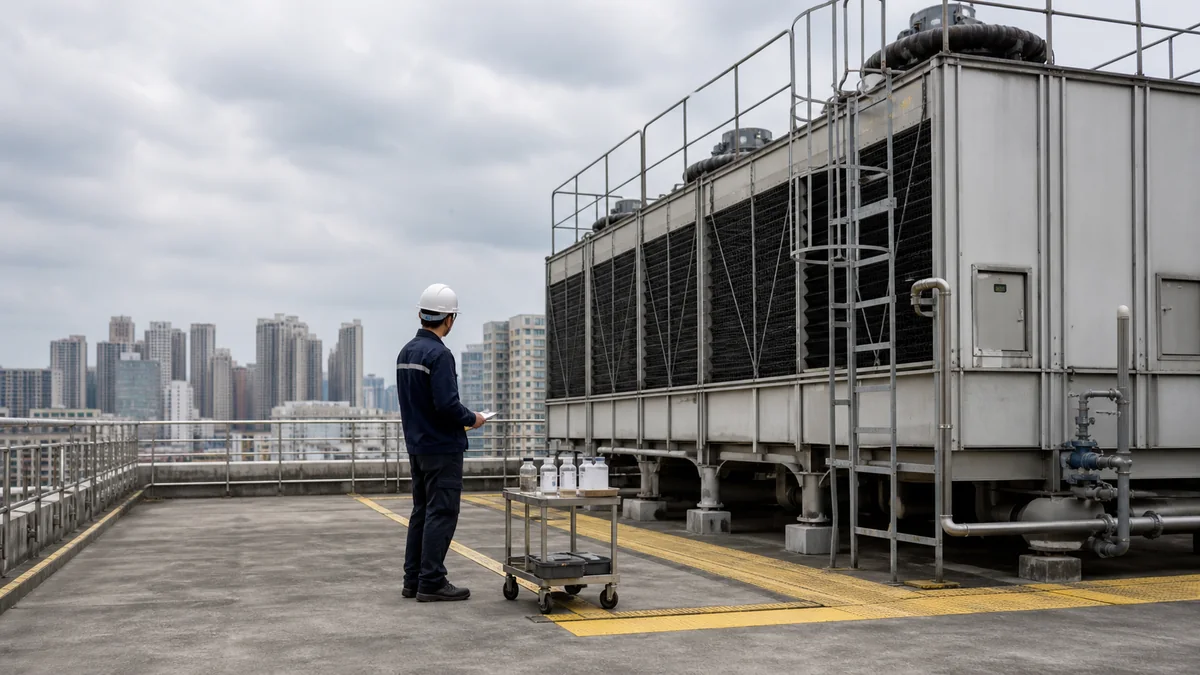
Image note: This image is a concept visual created for the topic of this article, not a photograph of an Evolt Cool Engineering project.
Three points to establish first
When deciding how to handle Fresh-water Cooling Tower Cleaning, Testing, Records and Audit, start with these points and link each one to the actual equipment, location and responsible person.
Equipment and water system
Confirm the actual cooling tower, basin, make-up, bleed-off, water-treatment and related circulation arrangement. This gives the buyer a common basis for comparing proposals and documenting why a particular scope was approved.
Responsibilities
Assign routine operation, maintenance, cleaning and disinfection, sampling, result review and abnormal-result escalation. For several units or areas, separate the record by floor, zone or equipment type so one exception does not obscure the rest of the review.
Record continuity
Operating data, chemicals, inspections, tests and corrective work should use traceable dates and equipment locations. Keep the responsible person, confirmation date and next action together instead of leaving an important constraint across separate message threads.
Treat the cooling tower as an ongoing management system
Cooling-tower management brings together water quality, equipment, chemicals, testing and records, with several roles coordinated under one programme.
Before approving work related to Fresh-water Cooling Tower Cleaning, Testing, Records and Audit, Bring equipment and water system, responsibilities, record continuity into one decision view so the site representative can see what is confirmed and what still needs clarification. Where the available information cannot support a conclusion, state the photograph, test or site confirmation still required rather than presenting an assumption as a result.
In the record for Fresh-water Cooling Tower Cleaning, Testing, Records and Audit, the resulting record should separate equipment identity, site conditions and unresolved points so the next person does not need to reconstruct the decision. Keep this information in the same record so the quotation, site arrangements and completion review use consistent equipment names and locations.
Coordinate cleaning, disinfection, shutdown and water treatment
The method must suit the system and site risks, covering personnel safety, chemicals, waste water and return to service.
For Fresh-water Cooling Tower Cleaning, Testing, Records and Audit, Arrange pre-work preparation, cleaning and disinfection steps, return to service in a workable order. If an earlier point is not confirmed, record the dependent action as pending instead of presenting it as complete. If the actual condition differs from the submitted information, update the scope, owner and date before deciding whether the affected work can continue.
In the record for Fresh-water Cooling Tower Cleaning, Testing, Records and Audit, the sequence should show prerequisites and the available work period, with any change reflected for the affected area and responsible person. The record should be clear to someone who was not present and distinguish completed work, unavailable checks and separately arranged follow-up.
- 01
Pre-work preparation
Confirm shutdown, isolation, risk assessment, chemical information, personal protection, nearby occupants and waste-water arrangements. Where the available information cannot support a conclusion, state the photograph, test or site confirmation still required rather than presenting an assumption as a result.
- 02
Cleaning and disinfection steps
Set out drainage, deposit removal, equipment cleaning, disinfection, rinsing or other approved steps, with an owner for each stage. Keep this information in the same record so the quotation, site arrangements and completion review use consistent equipment names and locations.
- 03
Return to service
Record refill, restoration of water treatment, equipment checks, abnormalities and restart time rather than noting only “completed”. The site representative can then check each location and record unresolved items before the work date instead of dealing with them at mobilisation.
Test results need clear follow-up ownership
Sampling and testing are useful only when results lead to action. Sample location, date and system condition need to be traceable.
When the site representative prepares for Fresh-water Cooling Tower Cleaning, Testing, Records and Audit, Check sampling arrangement, result review, abnormal results against an actual location, responsible person and record instead of leaving them as broad wording in a quotation or message. For several units or areas, separate the record by floor, zone or equipment type so one exception does not obscure the rest of the review.
In the record for Fresh-water Cooling Tower Cleaning, Testing, Records and Audit, after the check, keep missing information, its owner and the due date together; retain the date and supporting record for every confirmed point. Keep the responsible person, confirmation date and next action together instead of leaving an important constraint across separate message threads.
- 01
Sampling arrangement
Record the sampling point, date, time, system operating status, sampling party and sample identification. If the actual condition differs from the submitted information, update the scope, owner and date before deciding whether the affected work can continue.
- 02
Result review
Name who receives and reviews the result, how repeat testing or corrective work is decided and which site contacts are notified. The record should be clear to someone who was not present and distinguish completed work, unavailable checks and separately arranged follow-up.
- 03
Abnormal results
Link an abnormal result to immediate controls, investigation, cleaning and disinfection, water-treatment adjustment and verification, with a complete timeline. This gives the buyer a common basis for comparing proposals and documenting why a particular scope was approved.
Records and audit should reconstruct the programme
Good records allow management to see whether planned work was completed, abnormalities were closed and recurring programme gaps remain.
To turn Fresh-water Cooling Tower Cleaning, Testing, Records and Audit into a workable site arrangement, Use operating and maintenance records, chemical and testing documents, audit and improvement for approval or follow-up only when the source, date and equipment location can be traced. Keep this information in the same record so the quotation, site arrangements and completion review use consistent equipment names and locations.
In the record for Fresh-water Cooling Tower Cleaning, Testing, Records and Audit, keep the document name, equipment location and date aligned so a later reviewer can trace the conclusion to the original information. The site representative can then check each location and record unresolved items before the work date instead of dealing with them at mobilisation.
Operating and maintenance records
Keep operating, water-treatment, bleed-off, inspection, cleaning, repair and shutdown information under consistent equipment names. For several units or areas, separate the record by floor, zone or equipment type so one exception does not obscure the rest of the review.
Chemical and testing documents
Organise chemical information, usage records, laboratory reports, sampling forms and abnormal follow-up rather than leaving them in individual mailboxes. Keep the responsible person, confirmation date and next action together instead of leaving an important constraint across separate message threads.
Audit and improvement
The audit should identify record gaps, recurring abnormalities, open items and process improvements rather than relying on one pass checklist. Where the available information cannot support a conclusion, state the photograph, test or site confirmation still required rather than presenting an assumption as a result.
Common questions and next steps
These answers help site representatives organise the available information and confirm the next action for Fresh-water Cooling Tower Cleaning, Testing, Records and Audit. The actual response still depends on equipment condition, site constraints and the approved scope.
Before deciding the next action for Fresh-water Cooling Tower Cleaning, Testing, Records and Audit, review the equipment list, current photographs, known symptoms, available work period, access constraints and any previous quotation or service record together. Mark the date, person confirming each item and anything still outstanding. Separate several units or premises by location. This gives the contractor and site team a common basis without treating unmeasured, uninspected or unapproved work as confirmed.
Does cooling-tower cleaning complete the annual management programme?
The decision depends on the equipment, site conditions and confirmed requirements. Link an abnormal result to immediate controls, investigation, cleaning and disinfection, water-treatment adjustment and verification, with a complete timeline. This gives the buyer a common basis for comparing proposals and documenting why a particular scope was approved. Obtain written confirmation where the decision affects safety, cost or shutdown arrangements.
Who should follow up the test result?
The site should appoint one record owner, with the person responsible for the equipment or completed work confirming each change. Organise chemical information, usage records, laboratory reports, sampling forms and abnormal follow-up rather than leaving them in individual mailboxes. For several units or areas, separate the record by floor, zone or equipment type so one exception does not obscure the rest of the review. Obtain written confirmation where the decision affects safety, cost or shutdown arrangements.
Do the same procedures apply to ordinary split-unit cleaning?
The decision depends on the equipment, site conditions and confirmed requirements. Assign routine operation, maintenance, cleaning and disinfection, sampling, result review and abnormal-result escalation. Keep the responsible person, confirmation date and next action together instead of leaving an important constraint across separate message threads. Obtain written confirmation where the decision affects safety, cost or shutdown arrangements.
Prepare the site information for Fresh-water Cooling Tower Cleaning, Testing, Records and Audit
Share the equipment locations, types, quantities, current photographs, operating constraints and available work period so Evolt Cool Engineering can understand the relevant site scope. Include the site contact, access arrangements and any known shutdown restriction so the next discussion can focus on the affected equipment and practical work requirements.